Showing posts with label Africa. Show all posts

Monday, 7 August 2017

MXM public event: Carnival and Black & Brown Resistance

Carnival and Black & Brown Resistance

Facebook event page

630pm Fri 25 Aug
Housmans Bookshop
5 Caledonian Road
N1 9DY
£5 suggested entry

Speakers confirmed so far:

Sister Juni - East Oxford Carnival organiser
Arnie Hill - London Black Revs

As Black and Brown and migrant working class communities continue to feel the increasing squeeze of British colonial state oppression and exploitation, in the aftermath of the Grenfell state massacre, as Notting Hill Carnival itself sees pushes to basically annull it by removal out of the historic community of Ladbroke Grove: the Malcolm X Movement brings together this event and conversation exploring the histories of Carnival, its role as resistant cultural expressions of our experiences, and what is the outlook for the Carnival weekend in the and generally.

Wednesday, 26 July 2017

Libyans against terrorism, slavery & colonialism - Fri 28 July Housmans, 630pm N1 9DY

Libyans against terrorism, slavery & colonialism
630pm Fri 28 July
Housmans Bookshop
5 Caledonian Road
N1 9DY
£5 suggested entry

Facebook event page

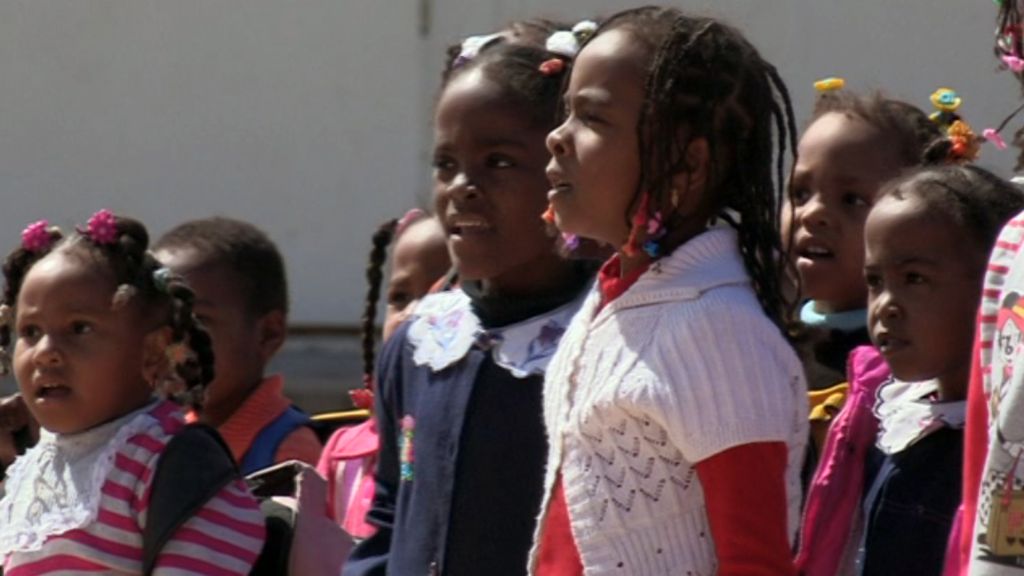
Libyan people from different parts of Libya will be speaking about terrorism in Libya and its roots and nature and how it reaches other parts of the world including Manchester. They will be speaking about the on-going persecution of darker skinned Libyan and non-Libyan African people, exposing the realities of the people smuggling and who is behind them. There will also be a person from Tawergha (pictured are internally displaced children from Tawergha), which was the ONLY Black African town in North Africa which has been totally wiped out by Nato proxy armed gangs.

Sunday, 28 May 2017

'We told British govt they were advancing terrorists in Libya'

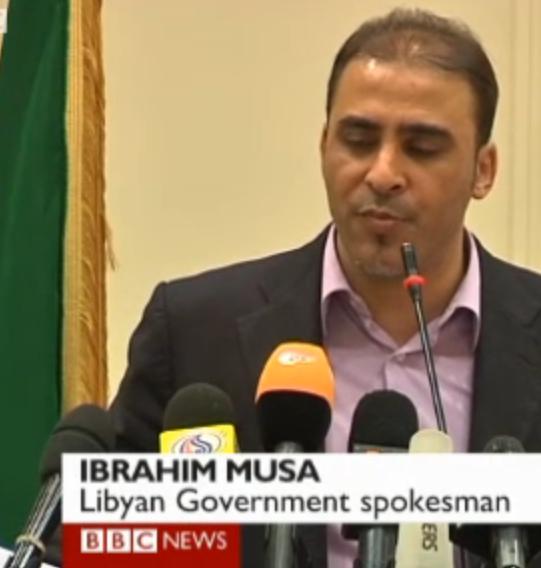
The Malcolm X Movement are very concerned that it is being exposed in many media reports for example here, here and here that the British intelligence services seems to have much more knowledge of the recent history and movements of the Salman Adedi the Manchester attacker than they and the British government are owning-up to. The Malcolm X Movement are proudly connected to and support the struggle of the Libyan people to resist terrorism and Nato and to struggle to reunify and stabilise their country and once again socialise their wealth for the benefit of the many and the African continent. We work with the anti-imperialist Libyan community also in England, and have had events with them and will do including the event coming up Libyans Against Terrorism, Racism and Slavery and Colonialism in late July this year. Moussa Ibrahim is our comrade, he was the last English-language media spokesperson for the Libyan Jamahirya, the socialist Libyan state that was destroyed by Nato and terrorist forces in 2011. He recently commented to us about his attempts at trying to critically engage the British government about their collusion with violent supremacist political forces in Libya, we at the MXM thought we should share this with you, as this is an issue that the British public need to know about that can better inform them further, beyond the mass rejection of the manner in which the British government has cynically tried to use the tragedy and horror of the Manchester terrorist attack:

"We told them all, British government and British media, collectively and one on one, publicly and in confidential meetings, that they were funding, arming and advancing the cause of the terrorists. They refused to listen. They understood it all. they planned it, they envisioned it, they hoped for it. Western Capitalism cannot survive without global wars, international terrorism, foreign intervention, and chaos. It is all part of the profit-making, money-generating mechanisms to feed the Capitalist Monster. It is not about religion, human rights or democracy. It is an essential, long-practiced and well-established strategy of imperialism. The left are idiots who lost their way and are unable to use genuine analytical tools and critical thinking to see through the lies and misinformation. They are intellectually and emotionally enslaved by the oppressive forces they claim to fight against. They have the minds and hearts of sheep." (comment made to MXM on 27/05/17)

Moussa Ibrahim also delivered a talk to the Malcolm X Film Festival series of events that we delivered in spring 2015, including this event in West Belfast:


Friday, 26 May 2017

Salman Abedi: How David Cameron and Theresa May brought their Libyan Revolution to Manchester

Salman Abedi: How David Cameron and Theresa May brought their Libyan Revolution to Manchester

By James Stuart, a Malcolm X Movement Coordinator

If the Labour leadership had any guts at all they would go all guns blazing on the developing Abedi collusion scandal. This tory government was central to unleashing hell on Libya, it sent scores of British Libyan terrorist exiles it had given aid and shelter to, back to Libya as its boots on the ground in their 2011 war on Libya.

British born Salman Abedi was one of them. His father had been a member, in the 1980s and 90s, of the (proto-al Qaeda) Libyan Islamic Fighting Group, a fanatical sectarian murder gang that brought terrorism to Libya and was sheltered and funded by the UK.

This is as clear cut a case of collusion as you will ever see. Even more so than the murky, but long proven and exposed, connections between British intelligence and sectarian loyalist paramilitary murder gangs in the six counties, this time the Prime Minister openly announced it.

As Home Secretary and in regular contact with the UK's intelligence services through the Joint
Intelligence Committees, Theresa May would have been central to greenlighting the recruitment of terrorists and sending them to Libya and elsewhere. And, crucially, in her role as boss of the UK Border Agency, in giving them entry to live in the UK and the British passports that allowed them to travel across borders unhindered.

That one of those terrorists, taking the training and contacts he had been granted only by the collusion of the British government's work in Libya, has come home and used his skills to bring the Libyan "revolution" back to the UK, should be hammered home by the opposition.

That 22 innocent people, many of them children, died in Manchester is intrinsically linked to the many thousands more innocents that died in Libya, and are still dying today, often washing up on Europe's beaches. It is a scandal of monumental proportions and needs to be brought fully to public attention

(Of course, it is pertinent to remember that large sections of the English Left fully supported this "revolution" and the terror and destruction it wrought, and still do support it as it continues in Syria)

To imagine that Salman Abedi, who was sixteen years old and still at school when he was first sent to fight in Libya in 2011, and was a frequent traveller to what is left of that country to engage in further acts of terrorism at will, up until just a few weeks ago, could do so without the full knowledge of the British intelligence services is beyond credibility.

Indeed they admit Salman Abedi was "known" to them, in actual fact he has to have been in direct contact with them. We also know that British intelligence and special forces are on the ground even now in Libya continuing to sow chaos and destruction, just as Salman Abedi and his father and brother were.

From Ireland to Afghanistan, to Libya and Syria, collusion between British intelligence services and the most ideologically reactionary and sectarian terrorist death squads has been standard operating procedure for British counter insurgency policy against states and movements it wished to overthrow for at least half a century or more.

There are so many questions that absolutely must be raised and demanded to be answered. Jeremy Corbyn should be calling for a full inquiry into what was known and by who. Who greenlighted Abedi, as a child, being recruited to fight in Libya? In fact we know the buck stops with Cameron, Hague and Theresa May. Now is the time to bring them to account.

#Collusion

Thursday, 25 May 2017

event: Libyans against terrorism, slavery & colonialism

Libyans against terrorism, slavery & colonialism
630pm Fri 28 July
Housmans Bookshop
5 Caledonian Road
N1 9DY

Facebook event page

Libyan people from different parts of Libya will be speaking about terrorism in Libya and its roots and nature and how it reaches other parts of the world including Manchester. They will be speaking about the on-going persecution of darker skinned Libyan and non-Libyan African people, exposing the realities of the people smuggling and who is behind them. There will also be a person from Tawergha (pictured are internally displaced children from Tawergha), which was the ONLY Black African town in North Africa which has been totally wiped out by Nato proxy armed gangs.

MXM event: Somalia Resists Famine, relief worker's report back

Somalia Resists Famine: relief worker's report back
630pm Fri 23 June
Housmans Bookshop
5 Caledonian Road
N1 9DY
£5 suggested entry

Facebook event page

Somalia is a proud people with a leading anti-colonial past and recent history. A once stable and prosperous liberated country it has in recent decades been ravaged by imperialist-instigated destabilisation. Today in part as consequence to all this the Somali people have been facing a drought and famine. Mohammed Ibrahim Shire (pictured) has been doing excellent work by returning to the Homeland from England to assist directly with the relief work and will be educating us about what is happening there and putting it into wider political contexts. 

Mohammed Shire is also the author of one of the only political biographies of Somali anti-imperialist socialist leader Siad Barre, he will be bringing some copies with him to sign and sell.

Tuesday, 25 October 2016

Launching new historic DVD and book on Libyan Popular Anti-Imperialist Resistance


Launching new historic DVD and book on Libyan Popular Anti-Imperialist Resistance

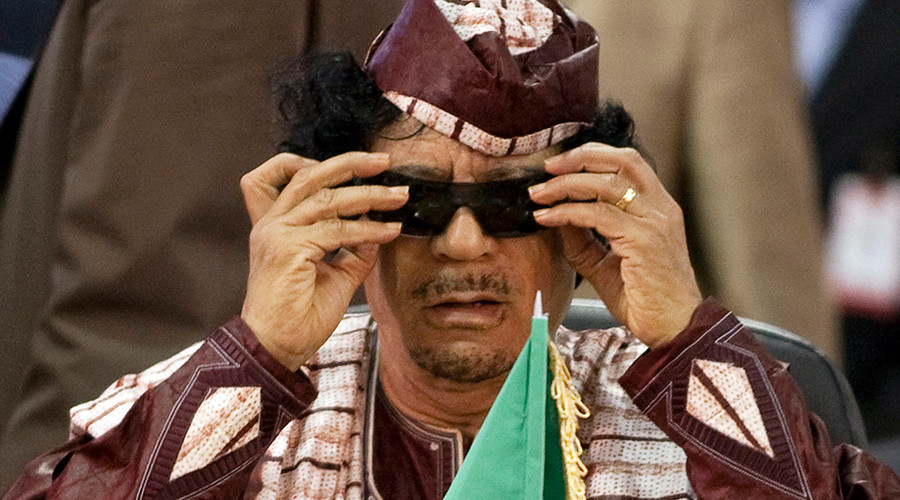
The Malcolm X Movement proudly hosts the premier of a hard-hitting, informative and inspiring look at African and Libyan popular anti-imperialist resistance entitled Nato War on Libya (53mins). We are also hosting at the same event a book launch of a collection of writings about the martyrdom of Muammar Gaddafi entitled On the Martyrdom of Muammar Gaddafi: 21st Century Fascism and Resistance. One of our MXM coordinators - Sukant Chandan is the editor of the book and the filmmaker of the doc.

The event takes place this Sat 29th Oct at 6pm at Marx Memorial Library,  EC1R 0DU (£5 suggested entry). The Libyan community are kindly and generously providing free Libyan snacks and refreshments at this event.

Please find the Facebook event page HERE.

In solidarity
MXM Coordinators Team

Thursday, 25 August 2016

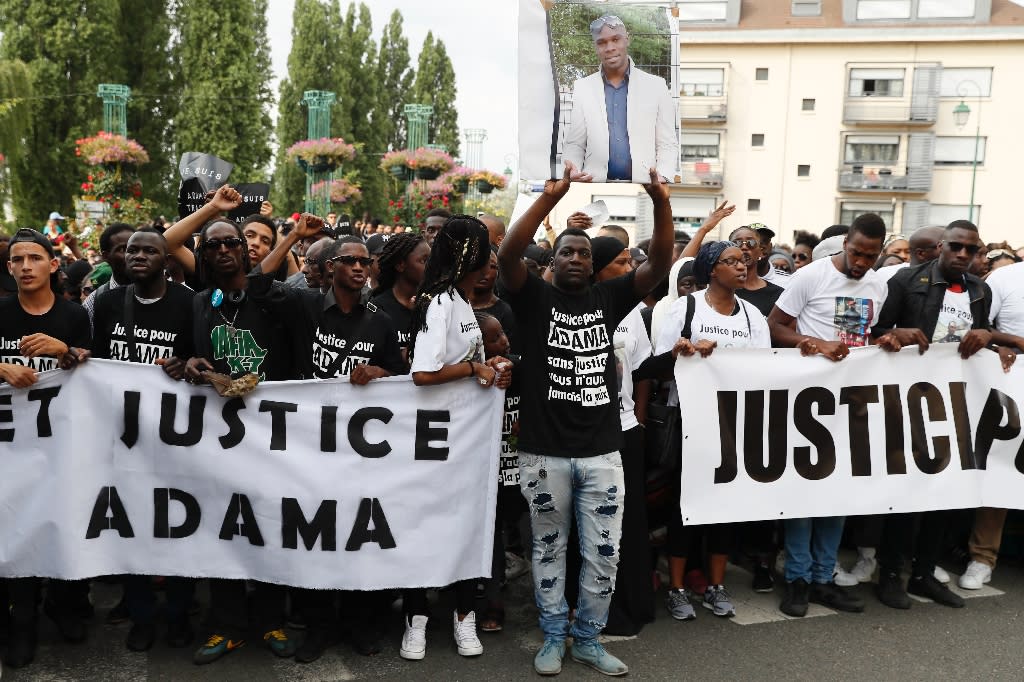
Black Communities in France against Police Brutality, the Adam Traore Case


The Adama Traore Case: Ten years after the Zyed and Bouna Case​


By Dr Moustafa Traore, coordinator at the Malcolm X Movement

Very few people outside the Hexagon really do realise how unequal the so called country of Liberty, equality, and fraternity is. France

July 19th 2016, unfortunately for Adama Traore and for his beloved ones, the 24 years old black man of west African cultural background and his family will have sadly come to the conclusion that little - or nothing- has changed since the death of Zyed and Bouna in 2005.

On Tuesday 19th of July, 2016, in the city of Beaumont-sur-Oise, in the Paris region, some police officers were looking for a man involved in a robbery and extortion affair. The suspect who happens to be Adama’s brother is not to be seen in the neighbourhood. The police officers however meet with Adama who refuses to comply to the police’s stop and search procedure. He flees the scene and will soon be caught up before fleeing again. It is at his parents’ apartment that Adama is finally found. He accepts to surrender and is flattened on the floor by three police officers who use their body weight against him on the floor. Adama is handcuffed and taken into police custody; and this is the last time he will ever be seen alive. A police officer in a clean t-shirt is seen later with the same t-shirt on, but this time stained with blood. Strangely enough, the latter is not bleeding. Many things are not clear.

When the Adama’s mother first comes to the police station, she is told that her son is in custody. She is not allowed to see him. A couple of hours later, she is informed that her son has succumbed to a heart attack. She still has got no clue of where the body of her son is. She is told that he is not at the police station, nor is the corpse of Adama Traore to be found in any of the closest hospitals.

It would take nearly twenty-four hours before the police finally  show the body to the family. The explanation given to the many lesions, bruises, and bumps that can be observed on the victim’s face and body is that they resulted from a deadly infection. If the first autopsy already shows that the 24-year-old man probably died from asphyxia, the attorney of Pontoise, the police and the French mass media evoke some sort of severe heart infection or heart attack as Traore's cause of death. It is the family’s new barrister, Yassine Bouzrou, who will -after properly reading the different declarations and official reports-unveil the irregularities, as well as the concealed truths and facts. They contradict the public declaration of the media, and also that of both the Pontoise attorney and the police. Indeed, many things are not clear in the Adama Case, indeed.  The absence of declaration or official report from any emergency rescue team is also another source of concern. Besides that, some documents even prove that an attempt was made by the police to file a complaint against Adama Traore for rebellion after he had already passed away.

According to the collective and organisation “Notre Police Assassine” -which fights and denounces police brutality more than 100 people lost their lives after confronting the French police between 2005 and 2015. In other words, approximately 10 people die every year unjustly in the hands of the French police. Research carried out in 2009 by the CNRS also revealed that young people of North African and Black African cultural background (Black Caribbean included) were 6-8 times more likely to be stopped and searched by the French police.  In no cases, have the French police ever been sentenced for their committed errors.

The United States have, these last few years, been a good example of what a discriminatory system is. American history including the Civil Rights movement of the 50s and 60s have helped coin the image the world has of North America as being a country where racial inequalities exist and which affect society as a whole. But, the case of France is even worse and untold.

People of Black African and North African Cultural background are too often used as scapegoats either to explain France economic difficulties or simply to hide the inefficiency of the successive French governments.

The numerous debates around French National identity that have been going on for a decade now and the different laws passed on Secularism, are obvious illustrations of a policy put into place in order to maintain the Whiteness and Christian legacy of France’s cultural landscape. Fighting against the cultural expression of Islam and other non-European cultural features is clearly assumed by French politicians and media.

Because of their discriminatory and racist practices, the French government and media have also, on several occasions, in the last five years, been pointed out and identified by European and international organisations fighting against racism and discrimination.

In the Adama Traore Case, every single day has its share of new revelations undermining the version of the authorities.This very case tells us a great deal about French institutions.

And, as history teaches us that ethnocides are always accompanied by attempts to get rid of part of the population carrying the non-accepted cultural particularities, I now ask myself about the objective of all these police officers when assassinating young French Arab and Black people, and disguising their murders.

It is important to remember that numbers are "power”; and, too many North Africans and Black Africans with obvious cultural particularities is undoubtedly what most lovers of the French republic fear, and would like to get rid of, at any price. In other words: “Is the assassination of Adama Traore by the police part of a larger cleansing programme, for the French republic at the expense of Ethnic minorities?” The question has merit and is justifiably asked, and Ethnic Minorities in France must be vigilant. Yes, indeed, our lives DO matter!


Sunday, 14 August 2016

Gaddafi’s Ghosts: Return of the Libyan Jamahiriya


Gaddafi’s Ghosts: Return of the Libyan Jamahiriya

By Malcolm X Movement Coordinator, Dan Glazebrook (this article first appeared on RT.com)

When NATO murdered Gaddafi and blitzed his country in 2011, they hoped the socialist ‘Jamahiriya’ movement he led would be dead and buried. Now his son has been released from prison to a hero’s welcome with his movement increasingly in the ascendancy.

There were various moments during NATO’s destruction of Libya that were supposed to symbolically crown Western supremacy over Libya and its institutions (and, by implication, over all African and Arab peoples): the ‘fall of Tripoli’ in August 2011; Cameron and Sarkozy’s victory speeches the following month; the lynch-mob execution of Muammar Gaddafi that came soon after. All of them were pyrrhic victories - but none more so than the death sentence handed down to Gaddafi’s son (and effective deputy leader) Saif al-Gaddafi in July 2015.

Saif had been captured by the Zintan militia shortly after his father and brother were killed by NATO’s death squads in late 2011. The ‘International’ Criminal Court – a neocolonial farce which has only ever indicted Africans – demanded he be handed over to them, but the Zintan – fiercely patriotic despite having fought with NATO against Gaddafi – refused. Over the next two years the country descended into the chaos and societal collapse that Gaddafi had predicted, sliding inexorably towards civil war.

By 2014, the country’s militias had coalesced around two main groupings – the Libyan National Army, composed of those who supported the newly elected, and mainly secular, House of Representatives; and the Libya Dawn coalition, composed of the militias who supported the Islamist parties that had dominated the country’s previous parliament but refused to recognize their defeat at the polls in 2014. After fierce fighting, the Libya Dawn faction took control of Tripoli. It was there that Saif, along with dozens of other officials of the Jamahiriya – the Libyan ‘People’s State’ which Gaddafi had led – were put on trial for their life. However, once again the Zintan militia – allied to the Libyan National Army - refused to hand him over. After a trial condemned by human rights groups as “riddled with legal flaws”, in a court system dominated by the Libya Dawn militias, an absent Saif was sentenced to death, along with eight other former government officials. The trial was never recognized by the elected government, by then relocated to Tobruk. A gloating Western media made sure to inform the world of the death sentence, which they hoped would extinguish forever the Libyan people’s hopes for a restoration of the independence, peace and prosperity his family name had come to represent.

It was a hope that would soon be dashed. Less than a year later, the France 24 news agency arranged an interview with Saif Al Gaddafi’s lawyer Karim Khan in which he revealed to the world that Saif had in fact, “been given his liberty on April 12, 2016", in accordance with the amnesty law passed by the Tobruk parliament the previous year. Given the crowing over Saif’s death sentence the previous year, and his indictment by the International Criminal Court, this was a major story. Yet, by and large, it was one the Western media chose to steadfastly ignore - indeed, the BBC did not breathe a single word about it.

What is so significant about his release, however, is what it represents: the recognition, by Libya’s elected authorities, that there is no future for Libya without the involvement of the Jamahiriya movement.

The truth is, this movement never went away. Rather, having been forced underground in 2011, it has been increasingly coming out into the open, building up its support amongst a population sick of the depravities and deprivations of the post-Gaddafi era.

Exactly five years ago, following the start of the NATO bombing campaign, Libyans came out onto the streets in massive demonstrations in support of their government in Tripoli, Sirte, Zlitan and elsewhere. Even the BBC admitted that “there is no discounting the genuine support that exists”, adding that "’Muammar is the love of millions’ was the message written on the hands of women in the square”.

Following the US-UK-Qatari invasion of Tripoli the following month, however, the reign of terror by NATO’s death squad militias ensured that public displays of such sentiments could end up costing one’s life. Tens of thousands of ‘suspected Gaddafi supporters’ were rounded up by the militias in makeshift ‘detention camps’ were torture and abuse was rife; around 7,000 are estimated to be there still to this day, and hundreds have been summarily executed.

Black people in particular were targeted, seen as symbolic of the pro-African policies pursued by Gaddafi but hated by the supremacist militias, with the black Libyan town of Tawergha turned into a ghost town overnight as Misratan militias made good on their promise to kill all those who refused to leave. Such activities were effectively legalised by the NATO-imposed ‘Transitional National Council’ whose Laws 37 and 38 decreed that public support for Gaddafi could be punished by life imprisonment and activities taken ‘in defence of the revolution’ would be exempt from prosecution.

Nevertheless, over the years that followed, as the militias turned on each other and the country rapidly fell apart, reports began to suggest that much of southern Libya was slowly coming under the control of Gaddafi’s supporters. On January 18th 2014, an air force base near the southern city of Sabha was taken by Gaddafi loyalists, frightening the new government enough to impose a state of emergency, ban Libya’s two pro-Gaddafi satellite stations, and embark on aerial bombing missions in the south of the country.

But it was, ironically, the passing of the death sentences themselves – intended to extinguish pro-Gaddafi sentiment for good - that triggered the most open and widespread demonstrations of support for the former government so far, with protests held in August 2015 across the country, and even in ISIS-held Sirte. Middle East Eye reported the following from the demonstration in Sabha (in which 7 were killed when militias opened fire on the protesters): “Previous modest pro-Gaddafi celebrations in the town had been overlooked by the Misratan-led Third Force, stationed in Sabha for over a year - originally to act as a peacekeeping force following local clashes.

‘This time, I think the Third Force saw the seriousness of the pro-Gaddafi movement because a demonstration this big has not been seen in the last four years,’ said Mohamed. ‘There were a lot of people, including women and children, and people were not afraid to show their faces … IS had threatened to shoot anyone who protested on Friday, so there were no green flags in towns they control, apart from Sirte, although there are some green flags flying in remote desert areas,’ he said. ‘But if these protests get stronger across the whole of Libya, people will become braver and we will see more green flags. I know many people who are just waiting for the right time to protest.’”

In Sirte, demonstrators were fired at by ISIS fighters, who dispersed the group and took away seven people, including four women. The same Middle East Eye report made the following comment: “The protests have been a public representation of a badly kept secret in Libya, that the pro-Gaddafi movement which has existed since the 2011 revolution has grown in strength, born out of dissatisfaction with the way life has worked out for many ordinary citizens in the last four years…[Mohamed] added that some people who had originally supported the 2011 revolution had joined the protests. Most Libyans just want a quiet life. They don’t care who takes over or who controls Libya’s money, they just want a comfortable life. That’s why Gaddafi stayed in power for 42 years. Salaries were paid on time, we had good subsidies on all the essentials and living was cheap.”

Friday, 22 July 2016

'Europe' Formed through A Colonial Genocide Against Africa, Asia and Islam


The Malcolm X Movement will be holding an event (details HERE) for Cedric Robinson and his amazing work - Black Marxism. Below is an extract from that work, this is an extract from Robinson explaining the genesis of modern Europe and European-ness, and how from the feudal times that feudal and the colonial conceptual nature of 'race' and 'racism' was at the heart of the developing concept of what Europe is and has become. This process took place in counter-opposition to the civilisations of Africa and Asia which were inspired and organised by the faith of Islam. This process of genocidal colonialism that developed a racialised white supremacist character, is fundamental in understanding how re-build a Black (non white) but also African and Asian revolutionary analysis and practice towards liberation. These and other connected themes will be explored and discussed at our event.

----------------------------------

Islam and Eurocentrism 
Extract from Cedric Robinson's Black Marxism, The Making of the Black Radical Tradition, p97-100, 1983

The history of Europe for the millennium following the fifth century of the Christian era had not been markedly uni-linear. That immense span of time had contained little if any basis for teleological certainty. Indeed, there had been eras such as the eighth century when the very presence of Western high culture had been faint, preserved in scattered outposts whose own fate was made doubly uncertain by barbarian invasion and the pathetic social and material conditions of the pagan societies that surrounded them.

By the year 700, European learning had fled to the bogs of Ireland or the wild coast of Northumbria. It was in the monasteries of Ireland that fugitive scholars pre- served a knowledge of the Latin and even of the Greek classics. It was in a monastery in Northumbria that the greatest scholar of his time, the greatest historian of the whole Middle Ages, the venerable Bede, lived and wrote. And it was from the monasteries of Ireland and England, in the eighth and ninth centuries, that English and Irish fugitives would return to a devastated Europe.

Christendom slowly recovered. During what would be called the Dark Age, allied with barbarian chiefs and kings, converted or otherwise, the church gradually grew into the most mature base for the feudal organization that characterized the early Middle Ages. It acquired land, and the peasants and slaves who made that land productive and valuable. Without the slightest sense of its moral bankruptcy, moreover, the leaders of the Christian Church unmercifully exploited its human base, legitimating the brutality of the nobility, their secular kin, and sharing the profits from the labor of bound workers and a foreign trade more than eight centuries long that delivered European slaves (among other goods) to Muslim merchants. Feudal Europe, for a time, however, proved to be capable of expansion while rotting from within-but it was only for a time.

By the thirteenth century, that phase of European development was at a close; the system collapsed. The ruling classes of feudal Europe were succeeded by their Mediterranean factors: merchants, traders, and bankers. They in turn spawned or defined the roles for those actors who supplied capital, technical, and scientific expertise, and administrative skills to the states that would lead the emergence of capitalist Europe. By then, however, European culture and consciousness had been profoundly affected. Legend, as we have seen, acquired the authority of history. Moral authority continued to dissipate. The mystifying veil, which the feudal ruling classes had created to hide, or at least soften the crushing oppression that they had put in place, was in tatters. Prester John's [1] first appearance in the European imagination of the twelfth century was consequently understandable.

The legend, if it indeed originated from within the ruling class, accomplished two very disparate ends: for one it presented Europe's intelligentsia with a powerful and splendor, Roman counterpoint, inspired by Christian idealism, biblical imagery and splendor, Roman law, and Greco-Egyptian civil craftsmanship. Here was the ideal Christian society, measure by which the failures secure in its political body and spiritual soul, It was the and insidious corruptions of actual Christendom could be calibrated in detail. A model Christian Empire, which, when compared to Europe, displayed those faults that had contributed to the inability to defeat Islam either spiritually or militarily. This was the legend's internal function.

Its other significance, however, was even more critical. The legend transmuted the world beyond Europe, "the Indies," into Eurocentric terms. Whatever was the reality of those lands and their peoples, came to be less and less important. For the next 300 years, between the twelfth and the fifteenth centuries, the legend of Prester John provided Europe's scholars and their l learned coreligionists with a structured a obfuse prism through which the authenticity of every datum, every traveler's report, every intelligence of its foreign trade, every fable of its poets, and every phatic foible of its soldiery could be screened and strained. Even direct evidence was not immune, for in the next century, G. K. Hunter tells us, this "frame of reference" was sustained:

"The new information which the English voyages of the sixteenth century brought to the national culture had to be fitted, as best it could, into a received image of what was important. This means that the facts were not received in quite the same way as they would have been in the nineteenth century. Historians of the last century were much taken with the idea of the Elizabethan imagination liberated b the voyagers. But there is little evidence of this outside the unhistorical supposition, "that's how I would have reacted." The voyages certainly did expand of physical horizon, but it is not clear that they expanded the cultural horizon at the same time. The image of man in his theological, political and social aspects could not be much affected by the discovery of empty or primitive lands." (G.K. Hunter in Shakespeare in His Own Age, 1964, p40)

The architects of European consciousness had begun the construction of that world-view that presumed the basic structure of other than European societies was at its foundation a European structure, that the moral, ideological, and spiritual scaffold of these societies was the same bottom structure discernible in European culture, that the measure of mankind was indeed the European. The legend of Prester John and his wondrous realm, the formidability of this purely Christian king who waited in patience for his Christian allies at the other end of the world, all this was the form impulse in its appropriate medieval costume. Thus, when the miraculous kingdom could not be located in the deserts and steppes of central Asia or even Cathay, it did not cease its fascination but was transferred to the south beyond the upper Nile The of other people fantasy and its attendant resolve to bend the very existence and being into convenient shapes were important beginnings for the destruction past. While the vitality Islam had seemed to mock the pathetic feebleness of of Christ's chosen, humiliating them in defeat and with the persistent threat of further occupations and invasions, the legend was compelling. And a basic lesson of propaganda learned: Europe's destiny was incompatible with the autochthonous non-European worlds. An increasingly prominent concomitant of the European millennium (roughly from the tenth to the present century) would be the refutation of those terms.

In freeing itself from Muslim colonization, Europe once again had a vigorous bourgeoisie and the state institutions to begin the construction of its own extra- European colonialism. From the fifteenth century on, that colonialism would encom pass the lands of Asian, African, and New World peoples and engulf a substantial fraction of those peoples into the European traditions of slave labor and exploitation. Capitalists were, from this point on, no longer dependent upon the material restraints Europe presented for the primitive accumulation of capital. What Genoese, Pisantine, and Jewish capitalists accomplished for Portugal and Spain in the fourteenth, fifteenth, and sixteenth centuries, on their expulsions from Iberia they transferred to north western Europe. Soon after, an English bourgeoisie succeeded those of Belgium and the Netherlands in the domination of the now-extensive world system. We have, however, gone far beyond our immediate interests in the Muslim part in Europe development. Here we must conclude, still somewhat arbitrarily and abruptly, the survey of the significance of Islam in European history. For the moment it will have to be sufficient to remind ourselves that Islam once represented a more powerful civilization, and, again, one closely identified in the European mind with African and Black peoples.

In retrospect the Western potential for creating the Negro had moved closer in a way to its realization. The cultural and ideological inventory was at hand. A native racialism had already displayed its usefulness for rationalizing social order, and with the advent of the Islamic intrusion into European history it had further proved its value by its transformation into an instrument of collective resistance and a negation of an unacceptable past. For the Negro to come into being all what was now required was an immediate cause, a specific purpose. The trade in African slaves, coming as it did as an extension of capitalism and racial arrogance, supplied both a powerful motive and a readily received object.

--------------------------------------------


[1] 'Prester John' was a myth, whereby European colonialists imagined a perfect Christian utopia ruled by Prester John that existed somewhere in the 'pagan' lands of the 'East'. ie., it was a legend that justified and motivated the colonialists to colonise and conduct genocide - MXM

Wednesday, 6 July 2016

Saif al-Islam is Freed! / Nato War on Libya Based on Same Lies and Deceit as War on Iraq

On the day that the Chilcot Report in part illuminates the deep flaws of the war on Iraq, Saif al-Islam Gaddafi has been freed in Zintan, a development that relates directly to the Nato war on Libya that repeated many of the same apparent mistakes and crimes that were committed on Iraq by leading Western states. There were similar fundamental flaws in the Nato war of destruction against Libya in 2011 as there was against Iraq in 2003.

The Nato war against Libya was based several lies that have since been proven to be so, such as the lie that the Libyan government bombed peaceful protestors and that African mercenaries were being deployed when actually there was a pogrom of lynching of Black people from the outset of the rebellion, including the total eradication of the only Black African town in North Africa, Tawergha which had a population of 40,000 people.

Saif al-Islam Gaddafi has been released by the Zintan tribe in the city of Zintan in the west of Libya after being in detention for nearly five years. Since 2011 similarly to Iraq, Libya and the Libyan and African and Asian people there have been left in a collapsed society where abduction, rape, people smuggling, thousands of militias have proliferated and led directly to the fall out of terrorism in the region including links directly to terrorist attacks in Algeria, Nigeria, Mali, Egypt, Tunisia and other countries.

The 'refugee crisis' is also a direct fall out of the Nato war against Libya that has led and continues to lead to tens of thousands of people dying in the Mediterranean Sea and in the Sahel and Sahara areas. Similar to Iraq, Libya was destroyed as it was a strategic unifier and uplifter of its own region in the African continent and had successes in that regard and was about to develop further Pan-African and South-South unity and development. Very similarly to UK and USA's plans for the war on Iraq, the same forces planned the same proxy militias to compliment the Nato's massive airstrikes campaign.

Saif al-Islam is a leading political figure in Libya both in the previous government of the Libyan Jamahirya and since. He is one of the most important national figures in Libya who has the capacity like other leading political prisoners and political figures active in Libya and in the Diaspora who is able to unite Libyans in the current plight they are in.

The Zintanis and most of the tribes and peoples in the Western Mountains are allied to the House of Representatives (HoR) based in Tobruk. The HoR has a legal process for reconciliation and forgiveness for political prisoners that includes Saif al-Islam. Zintan has completed this process in relation to Saif al-Islam and will be releasing him imminently. In stark contrast there was the massacre of over a dozen young men by militias in Tripoli last month, there was no due process, this was a illegal massacre motivated for purely narrow sectarian political interests. There needs to be justice and reconciliation for thousands of other similarly detained people in illegal detention across Libya, especially in Tripoli, Misrata, Sirte and other areas were Daesh or Daesh type forces have a presence.

However, there has been especially in the last year considerable moves by the social movements and patriotic tribes in developing a growing united Libyan process to healing the wounds of division and collapse between the Libyan people and their neighbours, and develop peaceful political processes in uniting the people towards an independence movement that reunifies and uses the God-given natural resources of Libya back to a socialised distribution for the benefit of all people of Libya and Africa. The freeing of Saif al-Islam is another historical development towards the reunification and independence of Libya, and many Libyans have welcomed this development.

Please get in touch with the Malcolm X Movement for Libyan and non-Libyan specialists who can speak to media on this issue.

[end]

Thursday, 19 May 2016

10 Reasons as to Malcolm X's Relevance on his 91st Birthday Today

Happy birthday Malcolm X

The Malcolm X Movement gives 10 reasons as to what is his relevance today in the situation our peoples find themselves in?

1. Black Power self reliance - ie., the strategy that states colonised peoples can unite and self organise against colonialism without the patronising and sabotaging hand of the western white left and liberals, but we can ally and unite with them on our own terms.

2. Black Power strategic courage and determination - stand your ground, stand by your people and comrades when under attack, don't water down but advocate and pursue your aims, design your tactics towards your strategies. Full freedom, fighting for a total end to colonialism and all the oppressions that it brings!

3. Stay out of the imperialist system defined comfort zones - Develop wisdom, but also be focused on your peoples struggle without hesitating, no matter how much our struggles and peoples are demonised, attempts at making them invisible by the enemy, we keep on keeping on, we keep on loudly and proudly representing them and supporting them. Stay out of the imperialist comfort zone, and develop your work and theories.

4. Fearlessness - "The price of freedom is death" - Malcolm X. Understand that the struggle is against the greatest violent force ever known, but that our peoples struggles yesterday and today is overcoming that violence, and we are part of that struggle and sacrifice, and with militant intelligence and wisdom we must proceed no matter what the price.

5. Constantly learn and self critique - always challenge what you know, listen to others who might be able to develop your understanding even though you may not agree with them. Learn from sucesssful ideologies that have actually liberated our peoples, learn from their struggles, from our leaderships across the world. Visit these struggles, peoples, leaders and countries and work with them and learn from them.

6. Global unity of actually existing forces of struggle - Malcolm X and the wider Black Liberation Movement in the USA was always massively inspired by revolutions across the world and especially Africa against colonialism and for liberation and socialism. Malcolm X made very clear that the Black Liberation struggle in the usa and the liberation of Black peoples in the 'west' is predicated on Africa and Asia being freed, that is why Malclolm X's primary inspiration was the Bandung Movement led by Nasser, Mao, Tito, Nkrumah, Nehru and Sukarno.

7. Organise hard on every level - Malcolm X developed newspapers (Muhammad Speaks, for example), developed self defence security, developed conferences and debates, and did amazing public speaking, organised people into different organisations, made delegations across europe, Africa and Asia.

8. Turn hostile elements into revolutionary elements - Malcolm X always engaged directly and conceptually by those who internalise the oppression of the system, especially those who play a 'gangster' role, ie., an imperialist defined counter revolutionary role in our communities against our peoples, and Malcolm X sought to critique them, recruit them and change them totally into revolutionaries.

9. Develop maximum unity between people and organisations - Especially towards the end of his life, he was working hard to reach out to many different forces including socialists, anti-imperialist nationalists, communists, civil rights leaders to develop a united struggle against capitalism and imperialism.

10. Dedicate your life, heart and soul, to the global struggle against colonialism and racism.


Sunday, 15 May 2016

MXM Easter Rising Event Report - 'The Most Important 1916 Centenary Event'

'This is the most important 1916 event I have addressed' - Bernadette Devlin MacAliskey
Event report on Malcolm X Movement's and Crimes of Britain's event 100 Years Since the Irish Easter Uprising

Friday 13 yesterday turned out to be a fantastic day to salute the revolutionaries and martyrs of the great Irish Easter Uprising in 1916.day the 13th there was a tiny bit of bad luck that was overshadowed by an enormously informative and inspiring evening. The Malcolm X Movement's event was entitled 100 Years Since the Irish Easter Uprising, and we were honoured to have two special guests, both of whom very kindly flew in especially for this event, being former PLO Ambassador to Ireland and veteran senior Palestinian revolutionary Saeb Shaath, and the most well known and respected living female Irish revolutionary Bernadette Devlin MacAliskey. It was also a great privilege to have on the panel leading global Black radical decolonial scholar Hakim Adi and finally our young comrade Gerard MacNamara from the excellent and highly successful social media project Crimes of Britain as well as MXM coordinator Sukant Chandan chairing the event. The revolutionary 'craic' was being had in full effect! The room was packed with over 80 people in total in attendance.

Sukant Chandan opened the event for the MXM as chair by stating that the historical importance of the 1916 Uprising are many including the fact that it was the only anti-imperialist uprising in Europe during the first imperialist war, and that it electrified the anti-colonial peoples especially of the British empire as it struck the enemy right on its doorstep at such a critical moment. Chandan stated the reason the MXM has put on this event and the reason that of all the centenary commemorations across the world why this one stands out is due to the fact that no one until this event has brought clearly the global anti-imperialist analysis from Africa and Asia into the analysis to 1916. Chandan singled out Peter Middleton for particular thanks who was in attendance and whom in the 1990s, was a leading political organiser in London for Irish freedom, including amongst many other the weekly protests outside Downing Street.

Gerard MacNamara from Crimes of Britain and co-organisers of this event made his maiden public speech, and a brilliant talk outlining the history of British colonial looting and genocide against the Irish people, in the forced famines against the Irish for example in taking away millions of gallons of butter away from the Irish, tearing off roofs of houses so people could not squat them and how this colonial supremacism AKA white supremacy/racism against the Irish is still normalised today. MacNamara stated that Channel 4 recently floated the idea of having a comedy on the Irish famine. While at the time of the famines a British army colonel stated: "you must pay or get out, I tell you, I care no more about turning you out on the roadside than I do about shooting the bird which flies across my path".

Hakim Adi made a very informative speech as to how the Irish struggle had inspired Black / Pan-African liberation, including stating how Claude McKay, a leading Halrem Renaissance man of Jamaican heritage spent time in London uniting with Irish revolutionaries in the 1930s. Adi also relayed how much the Irish struggle informed many ideas in the leader of the millions-strong global United Negro Improvement Association, Marcus Garvey, who named his own building Liberty Hall after the Irish revolutionaries building in Dublin also called Liberty Hall that is still a trade union hub today.

Saeb Shaath gave a impassioned contribution imparting knowledge to the attendees as to the plots of the British colonialists in their oppression of Ireland and how they developed their oppression to then export to the rest of the people of the British colonies. Shaath focused especially on colonial partition, of which the British are the global masters, and how they have divided and partitioned many countries and regions, including Palestine and the Arab world. Shaath then recounted the current situation of British imperialist meddling in the North African and Middle Eastern regions. There were many cheers and applause for Palestinian liberation throughout his contribution from the audience.

Bernadette Devlin MacAliskey very generously flew in from Derry especially for this event but the flight was delayed for an hour so she entered the event at 830pm. However, she was welcomed by great cheering and applause and everyone spontaneously and en-masse chanted her name in unison to welcome her, reflecting the great respect and admiration her role and sacrifices for Irish freedom and socialism inspires. Devlin spoke in her typically eloquent and articulate manner on a number of issues that captivated all in attendance. She stated that she has spoken at many centenary events, events attended by great numbers of people but that the MXM event she was addressing was the most important one that she had spoken at because while Irish people have been commemorating and saluting 1916 for 99 years, it was an event like this that brought together all the global dimensions and impact of 1916. Devlin stated that the Irish people who were starved out of Ireland by the British colonialists first went to the North Americas as Irish speakers not English speakers. Devlin explained that they were not a part of the colonial 'white' club, and that there was a process that turned Irish people into white people, and that was through realising that if they spoke English that they could not be visibly defined as being phenotypically be seen as anything other than white. Devlin stated that she did not identify with those of Irish heritage that saw themselves as white in the USA, but she identified closely with the Black Panthers, with the Native American movement and other radical movements. Devlin's contribution was met with great applause and a long standing ovation.

The event saw young Black and Asian and radical white British youth and Irish patriots and revolutionaries gather together to understand each other and to unite with each other. No one else is doing this important work in England in bringing together communities of resistance, communities of oppressed peoples.

The full speeches have been recorded on video and will be uploaded in the coming two weeks and will be shared across MXM accounts and supporters on social media.

The MXM would like to give a big thank you to all our speakers, and all those who attended and put in the hard work to make this event a success.

Malcolm X Movement facebook

Next MXM public event:
1926 General Strike: 9 Days That Shook Britain

MXM twitter

Email: 2015mxm@gmail.com


Thursday, 28 April 2016

500 African People Dead off the Libyan Coast

Malcolm X Movement: 500 martyred at one time! What's the context? Five years on, the African and Arab country of Libya that was thrown into death squad & people smuggling and torturing horror by Nato, its allied proxies and the near entire western left and radicals still has no campaign or voices raised for the struggle for justice for the Libyans, the people of Tawergha, Black Libyans in the hitherto only Black town in north Africa of which the entire population of 40,000 people are totally wiped out. Libyans are still fighting these criminals and these crimes, Black people in Libya and allied to all other shades of people in Libya are fighting for liberation. The fact that is all being totally ignored by radicals five years and continuing exposes all that needs to be known about western supposed radicals and lefties. The Malcolm X Movement will continue to raise our voices and efforts with them, and all additional voices and efforts are more than welcome.

MXM Coordinator on Chinese TV Speaking on Libya


Thursday, 14 April 2016

200th Anniversary of the Bussa-led Slave Revolt against British Colonialists


Big-up Bussa!

Exactly 200 years ago, on April 14th, 1816, a revolt was ignited by what seemed like the unlikeliest of leaders in the unlikeliest of places. The place was Barbados, a British-controlled plantation colony worked by enslaved Africans that had not seen a rebellion for 123 years; and the leader was Bussa, a slave who had been promoted to the level of manager. Managers were not supposed to revolt; indeed one of the major reasons for promoting intelligent slaves to such relatively privileged positions was to co-opt those with leadership potential into the system, providing an incentive for obedience. But Bussa was not to be co-opted; the rebellion quickly spread to 12 plantations, with almost 4000 enslaved Africans joining the revolt.

The whole region had been set ablaze by the Haitian revolution of the 1790s, which defeated French, Spanish and British troops to declare the first Black republic in 1804. To prevent further such imperial disasters, the British had abolished the slave trade and established a new code in an attempt to ensure slaves were not pushed to the point of rebellion elsewhere. Bussa’s rebellion, in a small and previously calm Caribbean island, showed that none of this was going to work; slavery itself would have to go. From this point on, it was just a matter of time, and in 1833 the abolition of slavery was formally declared.

Bussa’s rebellion should be remembered, for it holds important and pertinent lessons for our current rulers: 1, that attempts to co-opt people into supporting injustice do not always work and 2, Rebellions can emerge in the most unsuspected of places, amongst even the most apparently obedient subjects.

(Thanks to MXM coordinator Dan Glazebrook)

Saturday, 26 March 2016

Public event: 100 YEARS SINCE THE IRISH EASTER UPRISING: A Historic and Unique Blow to British Colonialism!


100YEARS SINCE THE IRISH EASTER UPRISING
A Historic and Unique Blow to British Colonialism!

The 1916 Irish Easter Uprising against British colonialism was one of the most important global revolutionary developments at the time, and shook the empire to its very core and inspired a new wave of revolutionary struggle against colonialism throughout Africa and Asia. This event seeks to bring this history and legacy to new generations of Black, Asian and working class anti-imperialist socialist youth. This event brings some the best of anti-imperialist voices to speak to this subject and to inform and inspire us.

SPECIAL GUEST SPEAKER: BERNADETTE MACALISKEY - A leader of the Bogside resistance, one of the youngest MPs ever and veteran republican socialist

SAEB SHAATH - Former PLO Ambassador to Ireland speaking on the impact of the Easter Uprising on the struggle of the Arab peoples against colonialism

HAKIM ADI - World renowned Black radical scholar and historian speaking on the impact of the Uprising on African liberation

Gerard MacNamara - From 'Crimes of Britain', speaking on the importance of the Uprising on anti-imperialist youth today

Chair: Sukant Chandan - A coordinator at the Malcolm X Movement

Other speakers tbc

Fri 13 May, 2016
Doors open at 6pm, 630pm sharp start, ends at 9pm
Marx Memorial Libray
37a, Clerkenwell Green, Farringdon EC1R 0DU
£5 suggested entry

This event is organised by the Malcolm X Movement and Crimes of Britain

Attending this event means that you are giving consent to possibly be in the video footage of the event which will be uploaded on social media.