Tuesday, 20 September 2016

200 Black Power Youth in Ldn Celebrate Tupac 20 Years On

London’s Black Youth Unite With Tupac Shakur’s Black Panther Family!


Nearly 200 overwhelmingly African and Asian working class youth, including two parties of people flying in especially for the event from mainland Europe, packed into the room in East London at RichMix for the Tupac 20 Years On event organised by the Malcolm X Movement, I am Hip-Hop and Intifada Street. The idea was initiated by Malcolm X Movement with I am Hip-Hop and Intifada Street becoming enthusiastic partners.

The event was historic. 20 years on from the martyrdom of Tupac Amaru Shakur the only commemoration event in the world saw political and cultural activists and artists gather together at an event that showcased people's love and creativity inspired by Tupac’s work and legacy.

The atmosphere was very positive, politically and powerfully Black Power radical and socialist and a strong sense of unity around our martyrs of the Black Panthers including Tupac. Tupac was the chairman of the New Afrikan Black Panthers in his late teens and spent the first moments of his existence in his mother’s womb while she - Afeni Shakur - was falsely imprisoned on charges related to her leadership of the New York Black Panthers, charges that collapsed. One of the other defendants (there were 21 in total, hence their name ‘New York 21’) was New York’s youngest Panther - Jamal Joseph - who later in life became one of Tupac’s two Godfathers and a close comrade and brother to Afeni Shakur.

We were honored to have have Jamal Joseph participate at our event via live internet video link. The event would not could not have been complete without a keynote address and QnA with Jamal Joseph himself. To have a veteran Black Panther and Black Liberation Army combatant, former political prisoner, now university professor and Oscar nominated elder comrade reasoning with us and teaching us was just very special. Jamal Joseph was joined on the panel by Ayishat Akanbi and Apex Zero.

Ayishat is a brilliant young fashion designer and also has a very grounded but firm sense of justice and Black Liberation to impart. Apex Zero’s rhymes and political insight is powerful and confident. The panellists and the QnA made for a very informative and inspiring learning process as we heard first hand the stories of the Panthers and Tupac from Jamal Joseph and the reflections and discussions from Ayishat and Apex and many brothers and sisters attending.

With an art exhibition by Intifada Street adorning the side of the stage, DJ Doni Brasco pumping the Tupac beats from the DJ table, the performances were enjoyable, fun and often showing great social and political insight and with, with Malcolm X Movement coordinator Margaret Atugonza making her debut not only as a young emerging political leader but also as a brilliant soul and jazz singer with her moving rendition of Tracy Chapman’s Fast Car. The open mic / Cypher session saw many young African and Asian young people share their skills and beautiful confidence with everyone in the room, and the room showed their appreciation!

The event was hosted brilliantly by I am Hip-Hop’s magazine editor Maya Rattrey, and all the Malcolm X Movement coordinators - Ahmed Kaballo who hosted the panel discussion with great panache, Dr Moustafa Traore, Margaret Atugonza, Sukant Chandan and Richard Sudan - and excellent performances from Big Cakes, Amy True, Ibrahim Sincere and JusWrite.

Many new contacts and alliances were made from the event, and it was a modest but inspiring and successful contribution to building an African and Asian and Black Power oriented socialist movement.

--------------------------

Raw live stream footage here, here and here.


Sunday, 4 September 2016

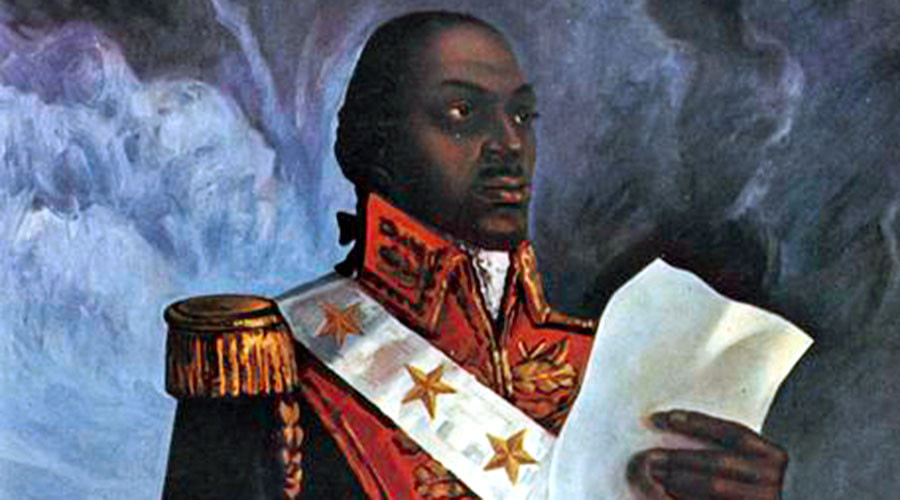
Rest in Power Toussaint L’Ouverture: Saluting Haiti’s triumph against colonialism


C.L.R. James: “Toussaint did not make the revolution, the revolution made Toussaint.”


By Malcolm X Movement coordinator Richard Sudan. This article first appeared on RT.com

April 7th marks the passing of one of the greatest, most revered and most important figures of African and world history, Toussaint L’Ouverture one of the liberators of Haiti.

By 1801 Haiti, an island made up of half a million slaves, two-thirds of whom had been born in Africa, declared independence from European colonialists.

By April 7th 1803, Toussaint L’Ouverture died in a prison cell in the French Alps of cold and hunger, but not before his work had ensured the Haitian revolution would continue after he was gone, and that slavery would never again return to the Island.

From late 1803, after many years of fighting colonial powers the Africans in Haiti led by Jean-Jacque Dessalines freed the island from the clutches of the Europeans.

To this day, Haiti remains the only successful African revolt against slavery in the occupied European controlled colonies, and in doing so also became the first Black republic with its own constitution, adopting ideals espoused by the French revolution with a greater sincerity and vigor than even the French bourgeoisie themselves.

Today, the island remains one of the poorest countries in the world, as is the price often paid when daring to resist colonialism and occupation. Just look at Cuba today, for example.

The Haitian revolution, which is not over, represents a tradition which is both important in historical terms and also in the modern context.  The so-called free world, or the same system which was built by free labor and human capital extracted from slavery, still operates today on the same terms, exploiting countries to seize resources, ultimately to control capital.

When there is not a direct war for resources, today, more and more, we see ‘proxy wars’ played out in other people’s countries, with super powers jostling for position albeit with different agendas.

At one point in the 1790s Haiti was also a place which was being fought over by different colonial powers in the Caribbean, themselves at war with each other in Europe. A large chunk of the World’s sugar cane came from Haiti, and so even in a time of war, when hundreds of thousands of Haitians were fighting tens of thousands of European occupiers, Haiti was still among the most lucrative islands in the Caribbean to control.

And therein lies one of the keys to Toussaint’s genius; born a slave, but later able to free himself in his 40s, Toussaint was able to enjoy some of the benefits of the emerging privileged class in Haiti. Toussaint was educated, was an astute political analyst, and also a second to none military commander.  It would be fair to say, that under Toussaint’s leadership, Africans in Haiti were able to organize and keep at bay several colonial powers at once for more than a decade.  At different points Toussaint both sided with the French to fight other European powers in Haiti-and towards the end fought the French, as Napoleon attempted to force the island back into slavery following partial reforms achieved towards emancipation and freedom.

While there is a long tradition of resistance in the Caribbean of fighting colonialists tooth and nail, both from the slave ships and in the islands themselves, Haiti remains the only successful rebellion, able to rid its shores of those who had enslaved its population. The rebellion did not start in Haiti, but began the moment the first Africans were enslaved by the European merchants and capitalists in West Africa.

Toussaint and the other leading figures of African resistance in Haiti, or San Domingue as it was then known, did not spring up out of obscurity.  The conditions which produced both the necessity for revolution, and the individuals and visionaries capable of leading it, were built up over several hundreds of years.

The brutal conditions suffered by slaves, which are unimaginable, built up over time a deep resentment.  Writers like C.L.R. James, for example, describe in their works in detail, the sophisticated violence, humiliation, and dehumanization that Africans endured at the hands of Europeans in Haiti. The sick pseudo-science which dominated the day, a bit like the perverse modern form of ‘humanitarian intervention’, suggested that Africans were not human, and that therefore to control them as animals required a level of brutality which would both subdue them both physically and psychologically.

It stands to reason then, scientifically and rationally if nothing else, that it would ultimately take a force at least of equal measure from Africans in Haiti to free themselves from the clutches of slavery forever.  And the first stages of emancipation in Haiti were indeed bloody, with Europeans being massacred indiscriminately as payback for years of suffering.

The resistance in a sense traced its roots back to Africa, and even by around 1750, there were literally thousands of Africans who had run away from the sugar plantations and were hiding in the hills and harder to access parts of the island. The Voodoo culture, songs of freedom, and determination to once again be free, had existed among the people for as long as they had been enslaved there.

By the time the French, who controlled Haiti, were preparing to do the unimaginable and behead their own King, and indeed anyone deemed disloyal to the class revolution in France, the conditions in Haiti had reached a point whereby the masses were fully ready to grasp the ideals of liberty and equality-more so than any European who had articulated them.

The call of the masses, including the emerging mixed race population of Haiti, to be given the rights of citizenship had achieved some success.  Ironically, France caving in to some reforms, if for no other reason than to ensure Haiti did not fall into the hands of other colonial powers, meant that leading up to the complete expulsion of the remaining Europeans in 1804, Africans in Haiti had in a sense become the true French Republicans on the island fighting for France. When Napoleon set his sights on reversing this, the fear among Africans was that Haiti would revert back to slavery which became a catalyst for fighting the remaining French too.

The final defeat of the French in 1804, after Napoleon had sent thousands to reclaim the island, secured Haiti’s place in history as the first and last fully successful slave revolt.  Haiti’s constitution and independence and even leadership, like any other, were not without its problems and contradictions.

But Toussaint, and the victory for Haiti, is an example of what is possible for the human spirit to achieve even in the face of insurmountable odds.  It shows what Africans were truly capable of in the face of all of the racist pseudo-science of the day.

The revolution in Haiti has been largely ignored or forgotten by mainstream history - perhaps because as an example of resistance, it reflects what is possible in the face of the powers which rule the world today - this is dangerous for any ruling orthodoxy.  When slavery is taught in schools, Haiti is rarely mentioned.

Neither for example is the island of St Thomas, which, according to many historians was liberated under the leadership of three women in 1793, and held for a year, before the Dutch eventually with the help of the other colonial powers restored the island to slavery.

Indeed colonization, occupation, oppression and political subjugation still continues today, and still continues largely for profit.

Toussaint stands as a towering figure of resistance to this, but so too do the women and men who raised him, who taught him his history, so that, even in later life when the African uprising in Haiti began, he would not seek to protect his own privilege and status, but rather, would leave it all in a second to go and fight, lead, and ultimately die for his people.

The revolution in Haiti, stands as a beacon of human triumph but also played a huge role in the eventual abolition of slavery.  The revolution was influenced by events in Paris, but Paris and the world were also shaped by events on the tiny island.

There are countless examples of resistance to colonialism throughout the world, but today on April 7th we must remember Toussaint, and also all those who fought and died in the fight for freedom and justice.

Toussaint and the revolution emerged as the inevitable consequence of slavery and repression, but also of the unique circumstances which developed in Haiti.  Such circumstances were developed over time by Africans in Haiti, who like the oppressed people all over the world, refused to resign and give themselves up to their fate.

As the great abolitionist Frederick Douglass once noted “There is no progress without struggle” and perhaps this is true of Haiti.

But revolution and progress is bigger than one person, and as C.L.R. James once wrote “Toussaint did not make the revolution, the revolution made Toussaint.”

Thursday, 25 August 2016

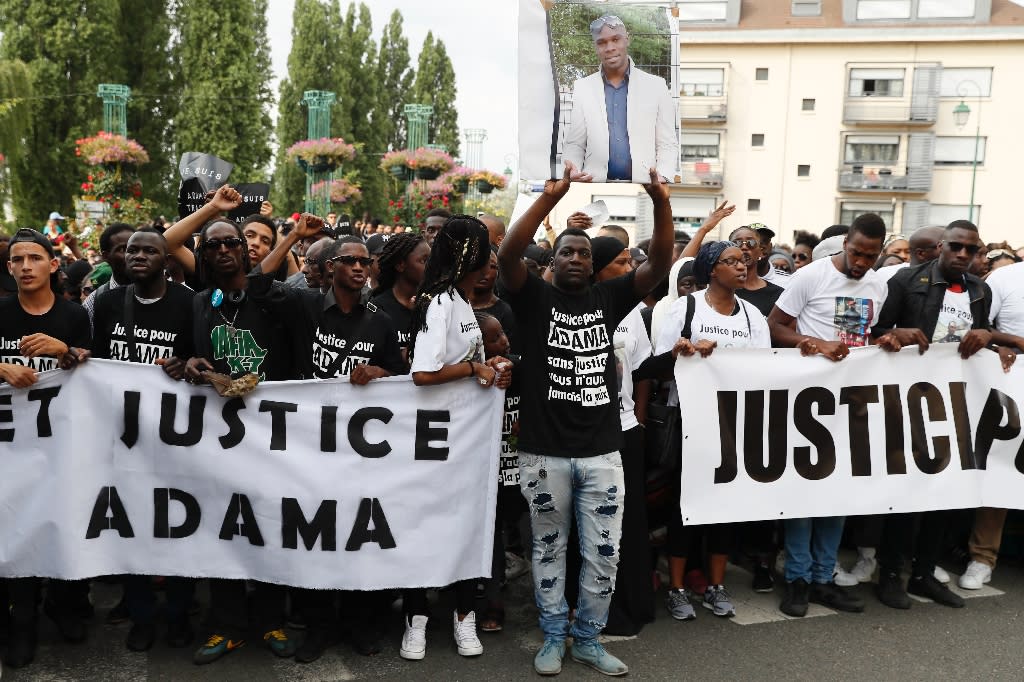
Black Communities in France against Police Brutality, the Adam Traore Case


The Adama Traore Case: Ten years after the Zyed and Bouna Case​


By Dr Moustafa Traore, coordinator at the Malcolm X Movement

Very few people outside the Hexagon really do realise how unequal the so called country of Liberty, equality, and fraternity is. France

July 19th 2016, unfortunately for Adama Traore and for his beloved ones, the 24 years old black man of west African cultural background and his family will have sadly come to the conclusion that little - or nothing- has changed since the death of Zyed and Bouna in 2005.

On Tuesday 19th of July, 2016, in the city of Beaumont-sur-Oise, in the Paris region, some police officers were looking for a man involved in a robbery and extortion affair. The suspect who happens to be Adama’s brother is not to be seen in the neighbourhood. The police officers however meet with Adama who refuses to comply to the police’s stop and search procedure. He flees the scene and will soon be caught up before fleeing again. It is at his parents’ apartment that Adama is finally found. He accepts to surrender and is flattened on the floor by three police officers who use their body weight against him on the floor. Adama is handcuffed and taken into police custody; and this is the last time he will ever be seen alive. A police officer in a clean t-shirt is seen later with the same t-shirt on, but this time stained with blood. Strangely enough, the latter is not bleeding. Many things are not clear.

When the Adama’s mother first comes to the police station, she is told that her son is in custody. She is not allowed to see him. A couple of hours later, she is informed that her son has succumbed to a heart attack. She still has got no clue of where the body of her son is. She is told that he is not at the police station, nor is the corpse of Adama Traore to be found in any of the closest hospitals.

It would take nearly twenty-four hours before the police finally  show the body to the family. The explanation given to the many lesions, bruises, and bumps that can be observed on the victim’s face and body is that they resulted from a deadly infection. If the first autopsy already shows that the 24-year-old man probably died from asphyxia, the attorney of Pontoise, the police and the French mass media evoke some sort of severe heart infection or heart attack as Traore's cause of death. It is the family’s new barrister, Yassine Bouzrou, who will -after properly reading the different declarations and official reports-unveil the irregularities, as well as the concealed truths and facts. They contradict the public declaration of the media, and also that of both the Pontoise attorney and the police. Indeed, many things are not clear in the Adama Case, indeed.  The absence of declaration or official report from any emergency rescue team is also another source of concern. Besides that, some documents even prove that an attempt was made by the police to file a complaint against Adama Traore for rebellion after he had already passed away.

According to the collective and organisation “Notre Police Assassine” -which fights and denounces police brutality more than 100 people lost their lives after confronting the French police between 2005 and 2015. In other words, approximately 10 people die every year unjustly in the hands of the French police. Research carried out in 2009 by the CNRS also revealed that young people of North African and Black African cultural background (Black Caribbean included) were 6-8 times more likely to be stopped and searched by the French police.  In no cases, have the French police ever been sentenced for their committed errors.

The United States have, these last few years, been a good example of what a discriminatory system is. American history including the Civil Rights movement of the 50s and 60s have helped coin the image the world has of North America as being a country where racial inequalities exist and which affect society as a whole. But, the case of France is even worse and untold.

People of Black African and North African Cultural background are too often used as scapegoats either to explain France economic difficulties or simply to hide the inefficiency of the successive French governments.

The numerous debates around French National identity that have been going on for a decade now and the different laws passed on Secularism, are obvious illustrations of a policy put into place in order to maintain the Whiteness and Christian legacy of France’s cultural landscape. Fighting against the cultural expression of Islam and other non-European cultural features is clearly assumed by French politicians and media.

Because of their discriminatory and racist practices, the French government and media have also, on several occasions, in the last five years, been pointed out and identified by European and international organisations fighting against racism and discrimination.

In the Adama Traore Case, every single day has its share of new revelations undermining the version of the authorities.This very case tells us a great deal about French institutions.

And, as history teaches us that ethnocides are always accompanied by attempts to get rid of part of the population carrying the non-accepted cultural particularities, I now ask myself about the objective of all these police officers when assassinating young French Arab and Black people, and disguising their murders.

It is important to remember that numbers are "power”; and, too many North Africans and Black Africans with obvious cultural particularities is undoubtedly what most lovers of the French republic fear, and would like to get rid of, at any price. In other words: “Is the assassination of Adama Traore by the police part of a larger cleansing programme, for the French republic at the expense of Ethnic minorities?” The question has merit and is justifiably asked, and Ethnic Minorities in France must be vigilant. Yes, indeed, our lives DO matter!


Sunday, 14 August 2016

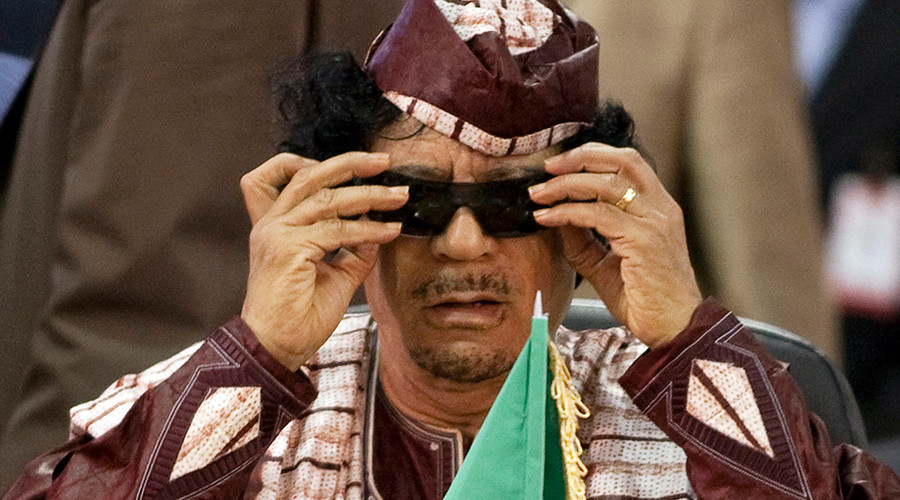
Gaddafi’s Ghosts: Return of the Libyan Jamahiriya


Gaddafi’s Ghosts: Return of the Libyan Jamahiriya

By Malcolm X Movement Coordinator, Dan Glazebrook (this article first appeared on RT.com)

When NATO murdered Gaddafi and blitzed his country in 2011, they hoped the socialist ‘Jamahiriya’ movement he led would be dead and buried. Now his son has been released from prison to a hero’s welcome with his movement increasingly in the ascendancy.

There were various moments during NATO’s destruction of Libya that were supposed to symbolically crown Western supremacy over Libya and its institutions (and, by implication, over all African and Arab peoples): the ‘fall of Tripoli’ in August 2011; Cameron and Sarkozy’s victory speeches the following month; the lynch-mob execution of Muammar Gaddafi that came soon after. All of them were pyrrhic victories - but none more so than the death sentence handed down to Gaddafi’s son (and effective deputy leader) Saif al-Gaddafi in July 2015.

Saif had been captured by the Zintan militia shortly after his father and brother were killed by NATO’s death squads in late 2011. The ‘International’ Criminal Court – a neocolonial farce which has only ever indicted Africans – demanded he be handed over to them, but the Zintan – fiercely patriotic despite having fought with NATO against Gaddafi – refused. Over the next two years the country descended into the chaos and societal collapse that Gaddafi had predicted, sliding inexorably towards civil war.

By 2014, the country’s militias had coalesced around two main groupings – the Libyan National Army, composed of those who supported the newly elected, and mainly secular, House of Representatives; and the Libya Dawn coalition, composed of the militias who supported the Islamist parties that had dominated the country’s previous parliament but refused to recognize their defeat at the polls in 2014. After fierce fighting, the Libya Dawn faction took control of Tripoli. It was there that Saif, along with dozens of other officials of the Jamahiriya – the Libyan ‘People’s State’ which Gaddafi had led – were put on trial for their life. However, once again the Zintan militia – allied to the Libyan National Army - refused to hand him over. After a trial condemned by human rights groups as “riddled with legal flaws”, in a court system dominated by the Libya Dawn militias, an absent Saif was sentenced to death, along with eight other former government officials. The trial was never recognized by the elected government, by then relocated to Tobruk. A gloating Western media made sure to inform the world of the death sentence, which they hoped would extinguish forever the Libyan people’s hopes for a restoration of the independence, peace and prosperity his family name had come to represent.

It was a hope that would soon be dashed. Less than a year later, the France 24 news agency arranged an interview with Saif Al Gaddafi’s lawyer Karim Khan in which he revealed to the world that Saif had in fact, “been given his liberty on April 12, 2016", in accordance with the amnesty law passed by the Tobruk parliament the previous year. Given the crowing over Saif’s death sentence the previous year, and his indictment by the International Criminal Court, this was a major story. Yet, by and large, it was one the Western media chose to steadfastly ignore - indeed, the BBC did not breathe a single word about it.

What is so significant about his release, however, is what it represents: the recognition, by Libya’s elected authorities, that there is no future for Libya without the involvement of the Jamahiriya movement.

The truth is, this movement never went away. Rather, having been forced underground in 2011, it has been increasingly coming out into the open, building up its support amongst a population sick of the depravities and deprivations of the post-Gaddafi era.

Exactly five years ago, following the start of the NATO bombing campaign, Libyans came out onto the streets in massive demonstrations in support of their government in Tripoli, Sirte, Zlitan and elsewhere. Even the BBC admitted that “there is no discounting the genuine support that exists”, adding that "’Muammar is the love of millions’ was the message written on the hands of women in the square”.

Following the US-UK-Qatari invasion of Tripoli the following month, however, the reign of terror by NATO’s death squad militias ensured that public displays of such sentiments could end up costing one’s life. Tens of thousands of ‘suspected Gaddafi supporters’ were rounded up by the militias in makeshift ‘detention camps’ were torture and abuse was rife; around 7,000 are estimated to be there still to this day, and hundreds have been summarily executed.

Black people in particular were targeted, seen as symbolic of the pro-African policies pursued by Gaddafi but hated by the supremacist militias, with the black Libyan town of Tawergha turned into a ghost town overnight as Misratan militias made good on their promise to kill all those who refused to leave. Such activities were effectively legalised by the NATO-imposed ‘Transitional National Council’ whose Laws 37 and 38 decreed that public support for Gaddafi could be punished by life imprisonment and activities taken ‘in defence of the revolution’ would be exempt from prosecution.

Nevertheless, over the years that followed, as the militias turned on each other and the country rapidly fell apart, reports began to suggest that much of southern Libya was slowly coming under the control of Gaddafi’s supporters. On January 18th 2014, an air force base near the southern city of Sabha was taken by Gaddafi loyalists, frightening the new government enough to impose a state of emergency, ban Libya’s two pro-Gaddafi satellite stations, and embark on aerial bombing missions in the south of the country.

But it was, ironically, the passing of the death sentences themselves – intended to extinguish pro-Gaddafi sentiment for good - that triggered the most open and widespread demonstrations of support for the former government so far, with protests held in August 2015 across the country, and even in ISIS-held Sirte. Middle East Eye reported the following from the demonstration in Sabha (in which 7 were killed when militias opened fire on the protesters): “Previous modest pro-Gaddafi celebrations in the town had been overlooked by the Misratan-led Third Force, stationed in Sabha for over a year - originally to act as a peacekeeping force following local clashes.

‘This time, I think the Third Force saw the seriousness of the pro-Gaddafi movement because a demonstration this big has not been seen in the last four years,’ said Mohamed. ‘There were a lot of people, including women and children, and people were not afraid to show their faces … IS had threatened to shoot anyone who protested on Friday, so there were no green flags in towns they control, apart from Sirte, although there are some green flags flying in remote desert areas,’ he said. ‘But if these protests get stronger across the whole of Libya, people will become braver and we will see more green flags. I know many people who are just waiting for the right time to protest.’”

In Sirte, demonstrators were fired at by ISIS fighters, who dispersed the group and took away seven people, including four women. The same Middle East Eye report made the following comment: “The protests have been a public representation of a badly kept secret in Libya, that the pro-Gaddafi movement which has existed since the 2011 revolution has grown in strength, born out of dissatisfaction with the way life has worked out for many ordinary citizens in the last four years…[Mohamed] added that some people who had originally supported the 2011 revolution had joined the protests. Most Libyans just want a quiet life. They don’t care who takes over or who controls Libya’s money, they just want a comfortable life. That’s why Gaddafi stayed in power for 42 years. Salaries were paid on time, we had good subsidies on all the essentials and living was cheap.”

Friday, 5 August 2016

On the Attacks on Nice and the Catholic Priest

The “Nice Attack” and a beheaded Catholic priest! But,who are the terrorists?

By Malcolm X Movement coordinator, Dr Moustafa Troare

History with a capital H is written day by day. All big events on a time scale are the results of a series of small -and sometimes even individual- stories. 14th of July-as always,since the French Revolution-the preparations are on their way. Shopkeepers are making money, selling more matches in one day than during the rest of the year. Fireworks are seen in shops before disappearing in the hands of children, or on some occasions, into their parents’ bags. For every single shop selling gadgets and other items prized on the French Bastille Day, the scenario is the same; stocks are emptied quicker than French baguettes handed out for free at rush hour in front of the Gare du Nord tube station in Paris.

At night, in the city of Nice, located in the south of France, the exception reigns, though. No fireworks but the sound of vehicles; no cheerful cries of happiness and stupefaction, but tears and cries in front what will be remembered as the scene of horror that will definitely mark that Thursday night of July 2016. The word is dropped only a couple of hours after the scene of horror was violently put to an end. Terrorism! This is the fourth terrorist attack France is suffering in eighteen months. The connection is quickly made. As suggested in an ISIS recording released a couple of years ago, a vehicle -more precisely a truck- was used in the Nice attack that claimed the life of 84 people. What a sad and dark day is that French bastille day, 2016. Hundreds of people coming to watch the fireworks, celebrating the French national day, and tens of them eventually dying in a scenario that even William Shakespeare could not have better staged.

The culprit and murderer is killed, as is always the case in France in such circumstances. This leaves fewer details and information on why things unfolded as they did. Some things are not quite clear, though. The response of the government is heard in the following days. No Islamist terrorist group has clearly claimed the attack yet; but, France will intensify its bombardments in Iraq and Syria against the so-called Islamic state, the French President said. Many things are not clear and do not connect. We learn that the terrorist was a French Tunisian, not known at all as a practising or devout Muslim. Things are unclear again, when the French government, through its interior minister and some important civil servants, puts pressure on the police officer in charge of the CCTV that night. Sandra Bertin refuses to erase and get rid of the video as ordered by the French interior minister. Neither will she write a dishonest report on what happened on that night of July, when 84 people lost their lives and twelve others were seriously injured. Big up to her!

Things again are not clear, yet, when less than a week after the Nice attack, a Catholic priest is beheaded in a church, in the city of Saint-Etienne-du-Rouvray, in the North-West of France. The responsibility for the crime will, this time, be quickly claimed by ISIS terrorist group.

In order to get to a better understanding of what is going on,and where the Hexagon as a whole is heading to, I decide to apply a very scholastic method. “Who, why, what, Where, and when” is the methodological approach that I decide to adopt in order to clear up the opacity surrounding the different attacks that have been going on, on a regular basis in France for a bit more than a couple of years now.

Who: The terrorists involved in the different attacks that took place on the French soil these last five years or so were, for the vast majority of them, French citizens or residents of Muslim cultural background. They all had some kind of experience or contact with the different war zones in the Arab World. These French citizens on the battlefield in Iraq, Libya and now Syria are also often used by the French secret services as information providers. Hence, also, the fact that quite a considerable number of them had the contact numbers and other details of some French secret service agents in their contact lists.  

Why: There is very little explanation as to why, once back home, these people decide to attack their mother land. Sociological and psychological analyses might, though, give us a clearer glimpse of what could be a possible explanation. France is clearly known and recognised by international organisations that are expert on the matter as a racist and Islamophobic country.

Youngsters of Black African and North African cultural backgrounds often have the feeling of being rejected and treated as second class citizens.  High unemployment and poor education characterise the life of these minorities put aside by the French political system and society as a whole. Resentment towards France is quite significant among the children of immigrants. This cocktail of animosity, rejection, violence, and the taste for blood experienced and developed in the war zones could explain their easy surrender to terrorist theories and activities.

What: Terrorism is seen, by those using it against their so-called “enemies”, as a war strategy aimed at terrorising and harming in order to win a fight or a battle. Because all those committing acts of terrorism in France have always been killed, it is also possible to say that it is a suicidal act. This, obviously, tells us that those committing acts of terrorism in France are sort of sacrificing their own life for what they think is right, in their own understanding of things.

Where: These terrorists have always perpetrated their mass massacres in Arab countries first, where helped and provided with weapons by the West, they tried to establish an Islamic State. That has clearly been the case in Iraq where with the help of the West they got organised to topple Saddam Hussein; in Libya, where again, with the help of the West and particularly France, they managed to get rid of Colonel Khadafy; or again in Syria, where, Al Nostra, the military branch of Isis, was doing -according to French former foreign minister, Laurent Fabius- an excellent job in Syria fighting against the Syrian government, and could therefore benefit from Western help involving money and weapons.

When: It is once back home in the Hexagon that the French warriors are finally recognised and labelled as “terrorists”. As if the execution of innocent people committed in the Middle East and other non-white populated regions was not enough for them to be awarded such status. Once in France, these French non official soldiers are now seen as potentially likely to commit crimes that will eventually make them worldwide terrorist figures. In Iraq, in Libya or in Syria, the French non official soldiers -who for a while served French interests-went, very often, through traumatising experiences that are not seriously dealt with when back in the Hexagon; and as we all know: “blood calls for blood” and “chickens always come home to the roost”.

To finish this article without pointing out any culprit for all what France is going through would be an insult to the reader. So, I ask the following question, in order to find out where the responsibility lies.

Had there not been any war in Iraq, had Khadafy not been executed, had the moderate rebels of Syria not been fuelled and provided with weapons against their own government, would we be discussing, debating, and talking about ISIS the way we do it here now?

It is sad to say it, but all attacks France suffered these past five years or so are nothing else but the perfect demonstration of the French “savoir faire”.


Monday, 1 August 2016

[French translation] Immigrant-Oppressing Company Infected with Swarms of Cockroaches

Les « London Blacks Révolutionnaires » et le « Malcolm X Mouvement » ont fait fermer deux restaurants de la chaine Byron à l’aide d’une invasion d’insectes


Les London Black Révolutionnaires et le Malcolm X Mouvement ont mené une action commune contre la chaine de Restaurants Byron en réaction à leurs agissements méprisants ces dernières semaines. Cette chaine de restauration a en effet piégé certains de ses employés, dont des serveurs et chefs cuisiniers avec la participation des Services d’immigration. Trente-cinq employés dont plusieurs se sont fait arrêtés et menottés, ont été déportés hors du pays, tandis qu’une centaine d’autres se cachent par crainte de subir le même sort.

Des milliers de cafards, sauterelles et criquets ont été déversésdans ces restaurants.
Nous nous excusons auprès des clients et employés pour tout désagrément. Cependant nous nous devions d’agir car de telles déportations sont inacceptables.

Nous devons défendre ces personnes et leurs familles d’un tel traitement deshumanisant.

Dans le contexte d’un nouveau gouvernement conservateur non-élu, qui de mémoire est le plus vicieux et le plus à droite que nous ayons eu, dans ce contexte de politique à tendance fasciste et de racisme grandissant, encourageant et promouvant un ressentiment, un racisme et une xénophobie de masse à l’encontre des communautés ethniques et immigrantes. Le Malcolm X Mouvement et les London Black Révolutionnaires ont décidé que des actions claires devaient être menées pour rappeler à nos communautés que sous cette répression et exploitation grandissante, nous possédons la capacité de nous défendre de manière stratégique face à l’adversité.

Le ministre britannique David Davis dans sa campagne de déportation de masses des migrants, se bat pour faire appliquer des mesures fascistes que même l’extrême droite et les organisations fascistes ont abandonnées il y a des décennies.  Un ministre allemand du gouvernement bavarois, défend également les déportations de masses des migrants. La victoire du Brexit a été un encouragement massif à la haine anti-migrants et au racisme. Trump gagne du terrain aux USA, les partis fascistes sont sur le point de gagner les électionsnationales en France et en Autriche.

Nous en tant que communautés d’immigrés Noirs, Africains, Asiatiques et Latinos devons tous nous unir et vaincre cette menace grandissante, sans quoi notre futur en tant que communautés (minorités) en « occident » est en danger direct.

L’expansion de ces mesures, de ces discussions politiques et atmosphères racistes et fascistes, sont en train de mener tout droit ce système colonialiste et capitaliste dans de profondes crises où les guerres à l’étranger et la répression à domicile ne cesseront de s’étendre, à moins que les communautés alliées ne stoppent cette marche oppressive.

C’est un grand défi qui nous fait face, mais les enjeux sont de taille pour nos familles et communautés ici, ainsi qu’en Afrique, Asie, Amérique Latine et Europe de l’Est.

Les actions trompeuses de Byron, sont en adéquation avec cette répression d’extrême-droite grandissante.

Cette main d’œuvre d’immigrants, qui depuis l’époque médiévale représente une part nécessaire au fonctionnement de nos sociétés. Cette main d’œuvre qui a le plus cuisiné et servi nos repas, qui a le plus nettoyer la nation et bien d’autres encore, mais qui est également la plus ciblée.
Les London Black Révolutionnaires et le Malcolm X Mouvement, soutiennent et considèrent que nos communautés d’immigrés doivent être parmi les premières communautés à défendre et doivent se tenir à la tête d’une classe ouvrière et de peuples opprimés contre le colonialisme et le capitalisme.

Nos intentions à travers cette action sont :

- Faire payer Byron pour leur atroce exploitation et malversation à l’encontre de ces employés.

- D’inspirer d’autres personnes afin de s’assurer que Byron restera fermé jusqu’à leur liquidation. Qu’ils s’excusent auprès de leurs employés et plus particulièrement auprès de ceux qui ont été déportés. Qu’ils les dédommagent ainsi que leurs familles, en accord avec les montants réclamés par les victimes, en plus des salaires et congés dus restants à payer.

- Servir d’avertissement aux autres entreprises dans le domaine de la restauration et de l’hôtellerie. Vous pouvez devenir  les cibles de ceux solidaires des migrants si vous piégez vos employés.

- Nous avertissons toutes les communautés d’immigrés et leurs familles, qu’il est temps de se lever, de s’unir et de s’organiser pour faire reculer et vaincre ce regain d’oppression et de racisme anti-immigrants.


Nous nous excusons auprès des clients et employés pour toute perturbation. Cependant, avec ce climat de xénophobie et de racisme grandissant, une limite doit être établie et nous devons dire : trop c’est trop ! Personne n’est « illégal ».

Nous avons agi aujourd’hui en solidarité avec nos frères et sœurs déportés quotidiennement.
Si vous êtes contre cette prise au piège sournoise que Byron a mené contre ses employés, vous devez supporter les actions de défense d’employés refugiés et immigrés.

Saturday, 30 July 2016

Two Byron Restaurants Shut Down with a Swarm of Insects


London Black Revs and the Malcolm X Movement Shut Down Two Byron Restaurants with a Swarm of Insects 


London Black Revs and the Malcolm X Movement have taken affirmative action against Byron restaurants chain in response to the Byron restaurants chains despicable actions in the past weeks having entrapped waiters, back of house staff and chefs in collaboration with UK Border Agency. Some 35 staff members who, many of whom were led off in handcuffs and have been deported out of the country while hundreds more are hiding in fear.

Many thousands of live cockroaches, locusts and crickets into these restaurants. We apologise to customers and staff for any irritation, however, we had to act as forced deportations such as this and others are unacceptable, we must defend these people and their families from such dehumanised treatment.

In a context of a unelected new Tory government that is the most vicious and right wing government in living memory, and in the context of growing racist and even fascist oriented policies encouraging and fostering mass resentment, racism and xenophobia towards ethnic and migrant communities, the MXM and LBRs decided we had to take some clear action to remind our communities we have the ability to strategically defend ourselves under this growing repression and exploitation in the face of adversity.

UK government minister David Davis is arguing for fascist policies that even far-right and fascist organisations stopped campaigning for decades ago in his advocacy of forced mass deportation of migrants, and a minister in the German Bavarian government is also advocating forced
mass deportation of migrants. The Brexit victory was a massive boost to anti-immigrant hate and racism, Trump is ascendant in the USA, fascist parties are about to win national elections in France and in Austria.

We as immigrant communities, Black, African, Asian, Latin American communities must all unite and defeat this growing menace that is before us, otherwise our very future as communities inside the 'West' is in direct jeopardy.

This growing racist and fascist policies, political discussion and atmosphere is taking this colonial and capitalist system into deeper crises where wars abroad and further repression at home will be increasing unless immigrant and allied communities halt this march of oppression. It's a great challenge before us, but the stakes are increasingly high for our communities and our families and communities in Africa, Asia, Latin America and East Europe.

The deceptive actions of Byron is in line with this growing far-right repression of the state. The very immigrant labour that has since the medieval times been a necessary part of our societies to function, the very ones who cook, serve our food, clean up after the nation and much much more and the ones
being targeted the most. LBRs and MXM stand in solidarity with them, and consider our immigrant communities one of the first communities we should be defending and they should be in the lead of a working class and oppressed peoples struggle against colonialism and capitalism.

Our intentions of this action were to:

1. Make Byron pay for their horrifically exploitative misdeeds.

2. To inspire others to ensure Byron is shut down until they either go out of business and, they apologise to those staff impacted especially the deportees, and compensate them and their families according to sums the victims decide including any remaining wages, overtime or holiday pay due.

3. Serve as a warning to other businesses in the hospitality and catering industry that you will be targeted by those who stand in solidarity with immigrants if you entrap migrant workers.

4. We warn all immigrant communities and families that now is the time to stand up, unite, organise and push back and defeat this upsurge of anti-immigrant racism and oppression.

We apologise to customers and staff for any disruption, however, with the growing climate of racism and xenophobia, a line must be drawn and we say: enough is enough. No one is 'illegal'. We’ve acted today in solidarity with our brothers and sisters who are being deported daily. If you stand in solidarity against the underhand entrapment of its workers that Byron has carried out. You should support the actions in defence of migrant workers and refugees.

London Black Revs & Malcolm X Movement
Friday 29 July 2016