Showing posts with label anti-fascism. Show all posts

Friday, 30 December 2022

Vivienne Westwood and the messy, racist tensions in Punk

Was Punk Aware of Racism?

Westwood, who has just passed away, pioneered a counter-culture fashion and culture in the 1970s overwhelmingly centred on a young white English mainly working class community in the 1970s whose appetite and push for for rebellion was predicated on three things: 1, their alienation of a capitalist-colonial Britain in clear economic decline after the post-war boom, and an country and culture that was still very grey and traditional in that typically weird, awkward english manner; 2, the global space for rebellion opened-up primarily by the Vietnamese resistance and victories culminating in 1975, and 3, Black-rebellion especially but not solely in the USA which was also in considerable part radicalised by the Vietnamese communists. 

Westwood teamed-up with the opportunist businessman Malcolm Mclaren and opened up her clothes shop initially called SEX and then by the end of the 1970s was called World's End. Westwood wanted to further radicalise and contribute to this youth rebellion in culture through her art and fashion design, and she did so quite effectively. These attempts were encapsulated by her 'destroy' t-shirt which had a massive Nazi swastika on it with the word destroy and also a fainter upside down Christ on a cross and also a picture of Queen Elizabeth II. Clearly Westwood's design was arguing to destroy these things, as she explained her motivation more recently: "We hated the older generation and it wasn't young people, but old people we felt were responsible for the mismanagement and cruelty in the world still going on... To us, it was a way of saying to the older generation, 'We don't accept your values or your taboos.'" 

The problem with the t-shirt is that in the Punk scene and other related and overlapping cultural groups of Rock culture the symbol of Hitlerite Nazism were already evident: Peter Fonda in the 1966 film The Wild Angels wears an Nazi 'iron cross' around his neck; the Hell's Angel racist gang proudly display all kinds of nazi symbols. The Rolling Stones on 5th July 1969 at their Hyde Park concert had got the far-right Hell's Angels gang to be their 'security'. Into the 1970s, Punk culture in England proudly displayed symbols of Nazism. Did they do this to shock the conservative oldies that they blamed for their alienation? Yes. But let's look into this social context a little more, as London in the 1970s was not a city only of grey/white people. 

London had the largest concentrations of Black and Brown working class people in the country, areas like Southall, Peckham, Brixton, Whitechapel, Tottenham, Ladbroke Grove/Notting Hill and other large swathes of the city had high and visible concentrations of Black and Asian communities. 1950s, '60s, '70s London going into the 1980s and even into the 1990s was a difficult place for our communities to live because of overt, vicious and intense racism on all levels. Racist street attacks and racist murders were frequent, open racist abuse by teachers, police and other people 'in authority' was just routine. Overt racism was the norm all the time on TV, too. 

Black and Brown people were largely excluded from access to cultural and musical activities that were open and welcoming to white people so we largely constructed our own in Reggae sound-system culture and dances, 'blues parties' which was when Black people organised their own dances often in residential homes; Indians, Pakistanis, Bangladeshis etc organised their own 'welfare centres' where they also had their own concerts. Through all this we syncretised increasingly with each other and also more slowly with Rock and Punk etc. 

We were attacked a lot by racist white people from all the 'new' sub cultures of Teddy boys, Skinheads and Punks. These white sub-cultures however arguably only came about because they saw Black and Asian youth pioneer their own resistance including culturally which made a massive spectacle in the otherwise largely culturally-dead and boring white England. Our food was pungent, our dress and music was loud and proud and from time to time we would rise-up and smash-up our oppressors in the police and white civilian racists. WE opened up this space for rebellion globally and locally, and white people followed behind but failed to address the central issues of racism that existed for everyone to see everyday. 

In this context the emerging Punk movement just failed to give any understanding or respect to these social contexts and the experiences of their non-white neighbours. In their project to reject their parent's generation by use of the swastika, it should be reflected empathetically as to how Black and Brown communities may have felt about this. If we take the least-problematic cultural product of Westwood's 'destroy' t-shirt, from a few metres onwards the t-shirt looks like a massive emblazoned Nazi symbol. Our parents and grandparents and young people who have some understanding of the violent white supremacist racism that it represents were not made to feel more at ease by it, they would have felt at unease by it. And that's just unacceptable. The reality is that many other white punks would use racist iconography all over themselves. More recently a few months ago British rapper (a light-skinned Black brother) Slow-Thai, with the most anti-fascist of intentions, wore Westwood's 'destroy' t-shirt at a concert a few months back, but all anyone could see from the crowd was a big Nazi swastika leading Slow-Thai to apologise and reiterate it was meant to be an anti-fascist message. 

An on-going controversy which is instructive to these issues is the Oi/Punk concert on 3rd July 1981 in Southall. Southall through the 1960s like other parts of London became increasingly a town of racialised immigrants. The new mainly Indian Punjabi arrivals faced racism on all levels including by 1976 the racist murder of teenager Gurdip Chaggar. Then the Labour Government backed a meeting of the far-right National Front at Southall Town Hall and they instructed the police to conduct a vicious para-military operation on those resisting the racists by beating us and arresting hundreds and killing a local teacher Blair Peach. Indian children in the 1970s in Southall also faced a horrific 'bussing' abuse, whereby the authorities would bus children out of the area as white racists thought the sight of our children was sullying what their slowly disappearing middle class white Southall. After all this a bunch of Punk bands decided to have a concert at a pub at the Hayes-end of Southall high street in July 1981. Local Asian youth and their friends launch an attack on the pub where the white skinheads were having their event and burn the place down. July 1981 in Southall became a leading moment of Black resistance in Britain along with uprisings in Handsworth, Toxteth, St Pauls, Brixton, and other places.

To this day we have punks defending the concert and basically blaming the local Asian community and totally ignoring and erasing all the contexts of what was taking place for decades in that community.  This white racist arrogance and conceit reflects a large part (not the entire part!) of these white-dominated cultural scenes. Yes, there were a few Black and Asian skinheads in the venue as they were in that scene, but it was a scene that was totally and proactively ignorant of racism. It's like the odd Asian or Black person who joined Tommy Robinson's / Stephen Yaxley-Lennon's English Defence League, yes there are a few non-white people in that milieu, but that social group is a racist white space and gives no respect to actual racist experiences and societal realities. 

Even what might appear to be a less racist space like the 1990s British Indie scene or the usa-based Grunge scene tended to be a white culturally defined space although by this point many Black and Brown people are delivering the scene as in the case of Cornershop, Asian Dub Foundation, Fun>da>mental, State of Bengal (albeit the last three are fusions of Hip-Hop/Rap, Reggae and Rock and Punk with sounds from the Indian subcontinent), and also in the case of Grunge and related Punk / Hard Rock: The pioneers of Bad Brains (from 1974!), Kim Thayyil of Soundgarden, Fishbone, 24-7 Spyz, Chuck Mosely of Faith No More, Ray Ahn and Keish DaSilva of the Hard-Ons, and of course the trailblazing pioneer Zack De La Rocha of Rage Against the Machine amongst many others. 

The Clash did perhaps more than most in the Punk scene to explicitly address anti-racist challenges head-on, especially with songs like Guns of Brixton and White Riot. And then Grove-based dread, activist and cultural figure Don Letts forms Big Audio Dynamite with Mick Jones who was previously in The Clash. The Clash on their 1983 album cover feature an iconic scene of the Notting Hill Uprising with Don Letts walking across a line of police. Interesting to note that Letts encouraged Bob Marley to look into the London Punk scene which inspires Bob Marley to make his song Punky Reggae Party with the lyrics including the following:"It's a punky reggae party

And it's tonight

It's a Punky Reggae Party

And it's alright

What did you say?

Protected by society

Treated with impunity

Protected by my dignity

I search for reality

...

"New wave, new craze

New wave, new phrase

I'm saying

The Wailers will be there

The Damned, The Jam, The Clash

Maytails will be there

Dr. Feelgood too

Ooh

No boring old farts, no boring old farts, no boring old farts

Will be there, singin'

...

"A bubble, a bubble

Looking for no trouble

But if you trouble, trouble

We'll give it to you double

Let me tell you

It takes a joyful sound

To make the world go round..."

However, because the white-dominated (racist on an either conceited-level with Oi/Punk/ Skinheads or 'lazy-racist' in the case of Indie and Grunge) cultures were largely excluding Black and Brown youth, these youth just got-on and made their own cultural musical movements that came to dominate the country and then the world in the form of Jungle Drum n Bass, and other genres. In hindsight and with the all-important principle that these spaces *should* have been always open to ALL youth of all backgrounds, and as such things only become a bit more healthy in these dynamics if Black and Brown youth take the lead. Black and Brown youth historically have always welcomed the participation of their white counterparts in their cultural spaces, but this has not been a reciprocal relationship.

The roots of Punk and Rock are also in Black music in Jazz, Rhythm and Blues, Gospel and Folk. MC5 were one of the first hard rock primitive Punk bands who were closely associated with the Black Panther Party. Which makes all this racist conceit and ignorance all the more wrong and unethical. The instances of racism in alternative Rock genres through the 1980s and 1990s are frequent and sometimes shocking as in the example of Axl Rose's / Guns n Roses 1988 song One in A Million in which Roses mouths-off against 'faggots, immigrants, n****s' and Muslims. See here: https://www.theguardian.com/music/2018/may/08/guns-n-roses-remove-song-homophobic-racist-language-one-million-reissue-album

In conclusion it's clear in the case of Westwood's attempts at radicalising the Punk scene through her 'destroy' t-shirt was definitely well-intentioned but in the absence of a concerted attempt at understanding and then navigating the leading-role of racism then mistakes will be made by even radical-minded people who try and attempt to contribute something to the struggle. Westwood herself went on a journey of becoming a celebrated figure of the establishment and collected her 'Order of the British Empire' from the Queen back in 1992. It's no surprise that she then said: "What I learnt from punk rock was that you don't change the establishment by attacking it." Clearly she thinks having become an establishment figure she can effect some 'change'. Whatever. Selling-out to the cause is nothing new, John Lydon from The Sex Pistols has turned, like many of his generation of the Punk scene, into a cliched gammon Brit nationalist. Mensi from the Angelic Upstarts, who even fronted a documentary for Anti-Fascist Action in the early 1990s, ends up an open sleazy racist in Thailand before his passing last year. None of this is to take away or distort Westwood's good intentions in the 1970s and her contributions to fashion and culture. That aside but connected: the bottom-line is that a community of people is either interested in understanding their place in society to fight oppressions from the system including racism, or they are not. It's just as simple as that. To be able to understand and traverse these complexities means pro-actively and appropriately keeping your doors wide open to anti-racist thinking, action and pro-active inclusivity to Black and Brown youth, and taking a lead from racialised communities amongst whom you will find those with understanding and experiences of the on-going fight against rising racism and fascism. 


Wednesday, 7 December 2022

Appears that Putin/Dugin Implicated in Fascist Coup in Germany


Red-Browners serve as the facilitators of fascism and fascism coups be it Jan 6th and now apparently Germany

In what some people might see as an extraordinary historic development but no surprise to anyone following the fascist project globally and specifically to Putin and Dugin's leadership of it, it seems that the German state and intelligence services have foiled plans for a fascist coup. They have conducted 135 raids in Austria, Italy and Germany. They have arrested some 25 people including of members of a far-right 'Citizens of the Reich' organisation that reports state has some 20,000 members, a senior members of the Putin/Dugin-backed Alternative for Germany Party (AFD), a Heinreich the 8th part of an old regional royal family in Germany, a Russian national called Vitalia B (more details to emerge about this) and a former AfD member of Germany's Bundestag, Birgit Malsack-Winkemann who was currently a serving judge and it is alleged she was being lined up as the new justice minister in the new government. Kevork Al-Massian, an Armenian heritage Dugin-paid operator was in the AFD. Was Kevork Almassian aware or involved in this the fascist coup? Berlin hosts a number of media platforms including Redfish (ran by our old comrade turned fascist collaborator and grifter Lizzie Phelan), Ruptly and other similar platforms. Socialism and anti-imperialism is not won through collaborating with, having dinner parties with, backing and promoting the far-right and their leadership. 

The pattern of fascism has become clearer and clearer, when it comes to Orban, Trump, Boris/Sunak Tories: the preferred approach of the modern fascist is to achieve power through official channels of the system of government albeit in a context where the far-right are in the ascendancy and then once having captured political power in the state to attempt to change and purge the organs of the state to turn them into a fascist state. Trump/Bannon's Jan 6th attempt at a coup is the model when the fascist project feels so emboldened that it attempts full fascist takeover. Germany is Europe's and the EU's most important state, Germany has made it clear to Putin that it won't be pressured by means of the Russian war of invasion, occupation and annexation of Ukraine. Germany turning fascist and pro-Putin would be a devastating development for the working class and oppressed people in Germany and globally. The outcomes of such a fascist coup are darker beyond our imagination.

This is a hugely important historic development and points to where history seems to be taking us currently: towards fascism brought to life by a global joint enterprise between particularly the Trump/Bannon-led western fascists and neo-nazis and the Putin/Dugin-led global leadership of far-right politics and forces. 

It's interesting to see the reaction of the western imperialist media to this coup attempt in Germany, currently at this time it's number EIGHT on the headlines on the colonial liberal Guardian news website. It is not seeing rolling coverage on the imperialist TV news media either. The western ruling classes in-general as well as the red-brown fascist collaborators don't really want to see this problem, the former because they are compromised and don't want to raise the alarm lest people take a militant anti-fascist approach that would radicalise socialist and anti-imperialist forces and raise their capacity, and the red-browner collaborators want to downplay the new fascism because they are committed to twisting as much fascism into 'socialism' as possible or to just attempt to bury the issues like Jan 6th and the broader global fascist project. 

The German state like many other western states (see France) is in a precarious state as increasing numbers of their masses want fascism. However, there is also clearly a conflict within the German state as to whether they should take a full fascist approach like many of the pro-MAGA ruling classes in the usa, or not. At the moment the German state seems to have decided that they are not going to tolerate a total fascist takeover. If the German state has been the force to stop a fascist coup, then this is highly significant. It doesn't make the German state a political entity for Black Communists etc to support, but at the same time we have to state things as they are and recognise the weakness of Black communities and the general class struggle that isn't really playing an actual anti-fascist role anywhere in the 'West'.

As we go forward it will be interesting to see what more comes out of the investigations and prosecutions of the German state against this attempted fascist coup. What was the role of the usa state and the British state, if any? Russian state spokesperson Peskov has stated: “This appears to be a German internal problem. There can be no question of any Russian interference,” which reminds one of the saying 'nothing is true until it's been officially denied'. Russia has the biggest agenda to gain out of a fascist coup in Germany led by a far-right movement with senior elements of its proxy AFD party there. 

As ever, smash the red-browners, smash fascism. The global class struggle of the black working classes will not be able to gain capacity until this global fascist project is challenged to its defeat. 

Sunday, 30 October 2022

1919 Race Riots in Cardiff, Liverpool & East London (white racist mobs and resistance to them)

The first of the so-called race riots in British ports took place on Tyneside. Arab and Somali seamen are said to have settled in South Shields in the 1860s, and there were some West African and West Indian seamen in North Shields before the First World War. The war increased the area’s black population fourfold.4 In February 1919 some Arab seamen, all British subjects, having just paid £2 each to clear their union books, which had to be up to date before they could ship out, were then refused work. An official of the stewards’ and cooks’ union, J.B.Fye, incited a crowd of foreign white seamen against them; he was later convicted of using language likely to cause a breach of the peace. Fye hit one of the Arabs, who hit him back. The crowd chased the Arabs to Holborn, the district of South Shields where they lived. Here they were joined by some compatriots armed with revolvers, who fired warning shots over the heads of the at- tackers. The Arabs then turned the tables by chasing the crowd back to the shipping office, wrecking it pretty thoroughly, and beating up Fye and another union official. Army and navy patrols were called in and 12 Arabs were arrested. At Durham assizes, where the judge expressed some sympathy for them, three were acquitted, 12 were sentenced to three months’, and two to one month’s, hard labour. 

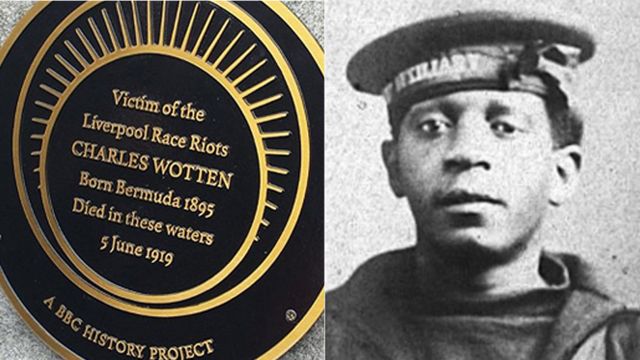
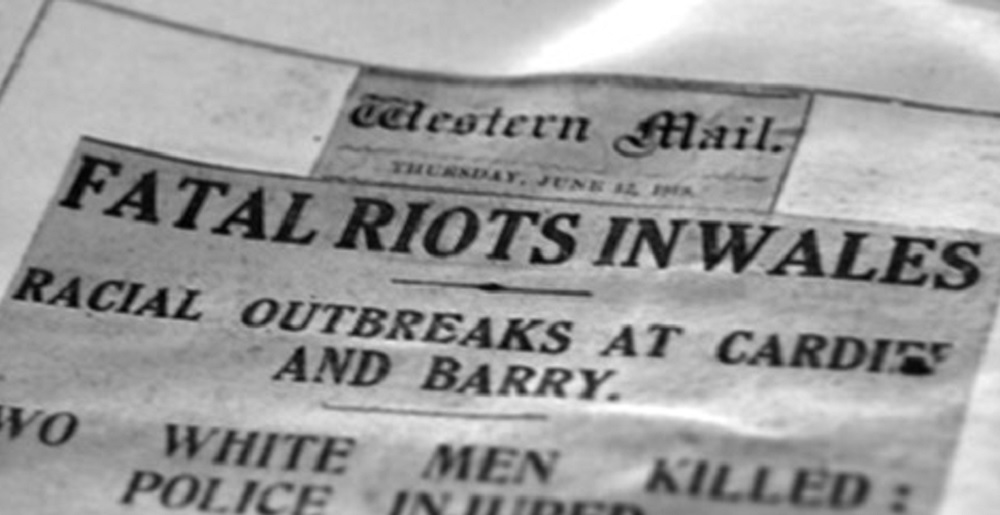
That was not however the feeling in south Wales, which was experiencing at the same time ‘one of the most vicious outbreaks of racial violence that has yet occurred in Britain’. During a week of anti-black rioting, three men were killed and dozens injured, and the damage caused to property cost Cardiff council over £3,000 to repair. The rioting ‘left a scar on the race relations of the city which took more than a generation to heal’.18The trouble began in Newport. On 6 June 1919 a crowd collected when a black man was alleged to have made an offensive remark to a white woman. One account said he put his arm round her and was attacked by a soldier. There was a fight in which many people were hurt, crowds started smashing the windows of black people’s homes, and the occupants defended themselves with pokers and staves and fired warning shots over their assailants’ heads. Two houses in George Street were wrecked and ransacked by a mob of several thousands that smashed every window, tore out the window-frames, threw bedding and furniture, including a ‘valuable piano’, into a nearby railway siding, and set fire to them. In Dolphin Street, Chinese laundries and a Greek-owned lodging house were wrecked, as were black people’s houses in Ruperra Street and a restaurant in Commercial Road owned by a black man named Delgrada. Twenty black and two white men were arrested. Plain-clothes and mounted police were drafted into the town, but it took a baton charge to disperse crowds making fresh attacks on George Street boarding-houses. ‘We are all one in Newport and mean to clear these niggers out’,one rioter told a reporter.The scene in Newport, said the South Wales Argus, looked like the aftermath of an air raid: ‘Windows are smashed, furniture in the front rooms has been wrecked, blood-stains are visible.’

On 11 June, at Cadoxton near Barry, a 30-year-old demobilized white soldier named Frederick Henry Longman, a dock labourer by trade, accosted a 45-year-old seaman from the French West Indies named Charles Emanuel with the words ‘Why don’t you go into your own street?’ then punched him on the forehead. Three other white men joined in, one of whom began hitting Emanuel on the back with a poker. Emanuel took out a clasp-knife and stabbed Longman, killing him instantly. Emanuel was chased by a large crowd and arrested with the knife still in his hand; he was later found guilty of manslaughter and sent to prison for five years. After his arrest crowds gathered outside the police station, smashed the windows of black people’s homes, and ‘paraded the streets of Cadoxton looking for coloured men’ until the early hours of the morning. Next day, though extra police had been drafted in, there were attempts to wreck black people’s homes. 


Cardiff ’s black population had increased from about 700 on the eve of the war to about 3,000 in April 1919. About 1,200 of these were unemployed seamen. There were at least as many demobilized white soldiers in the city, most of them unskilled. On 11 June a brake containing black men and their white wives, returning from an excursion, attracted a large and hostile crowd. Soon a crowd of whites and a crowd of blacks were lined up on opposite sides of Canal Parade bridge. A reporter saw ‘a howling mob of young fellows and girls facing the blacks at about 100 yards distance’. With shouts of ‘Come on and set about them!’ the whites made a rush from the north side throwing stones, whereupon revolver shots came from the black crowd and a white soldier was wounded in the thigh. The whites pressed forward in an attempt to reach Bute Town, the narrow cluster of streets between the Glamorganshire Canal and the Taff Vale Railway where a large number of Cardiff ’s black citizens had their homes, but police managed to stop most of them.The chief constable’s report, issued a month later, blamed whites for the original incident. ‘If the crowd had overpowered the police and got through’, he wrote, ‘the result would have been disastrous, as the black population would probably have fought with desperation and inflicted great loss of life.’Some attackers did get into Bute Street, where they smashed the doors and windows of Arab-owned lodging-houses with sticks – one shop front was ‘smashed to matchwood’ – and where a woman was arrested for flourishing a razor and ‘vowing vengeance on “niggers”’. A house in Homfray Street was set on fire and gutted, and in Caroline Street a white man died after his throat was cut – by a black man, it was alleged, though no eyewitness ever came forward, no black man was found in the vicinity, and no one was ever charged with the crime. A house owned by black people at the corner of Morgan Street and Adam Street was ransacked. Police broke into a house in Hope Street and dragged out a black man with blood streaming from his head: ‘He was greeted by a howl from the crowd, and several kicks and punches were aimed at him.’ A second soon appeared, ‘in much the same condition as his compatriot’. Last to be brought out was ‘a white girl, whose mouth was bleeding’. A black man called Norman Roberts was admitted to hospital with a severe knife wound in the abdomen. The disturbances went on until around midnight. 

This was only the prelude to a much more determined and organized attack on Cardiff’s black community over the next few days. The whole of the city’s police force was concentrated in the cordoned-off area that The Times called ‘nigger town’; a company of the Welsh Regiment was secretly drafted into Cardiff and held in readiness; and the stipendiary magistrate was preparing to read the Riot Act. Contemporary reports make it clear that ‘Colonial soldiers’ (i.e. Australians) armed with rifles placed themselves at the head of the lynch mobs. ‘The methods adopted by the soldiers’, said one report, ‘were those of active service, and the men, after firing from the prone position upon the blacks, crawled back to safety.’ Some of these riflemen were in khaki or blue uniforms, others in mufti with medal ribbons. The Western Mail gave a vivid account of an attack on the former Princess Royal hotel in Millicent Street:Several Colonial soldiers present constituted themselves the ringleaders of the besieging party, which was largely made up of discharged soldiers . . .The door of the house was attacked and it was quickly burst in. Men crowded into the narrow hall and began to ascend the stairs . . .A revolver shot rang out, and with it the exclamation, ‘My God, I am hit!’ Five other shots quickly followed.The attackers dropped flat on their faces, crawling back and telling those behind to do the same. They held up a table as a shield, and the defenders backed to the wall of the room. ‘Once at close quarters, each of the surviving attackers took his man, and soon desperate struggles were in progress around the room.’ Meanwhile ‘others of the raiding party were . . . busily engaged in ransacking the premises. Kit-bags containing clothing were hastily abstracted, and there were willing “receivers” outside.’ After it had been looted the house was set on fire. It was in Millicent Street that 40-year-old John Donovan, wearing his Mons ribbon, was shot through the heart by A cornered Arab. Ibrahim Ismaa’il, a Somali seaman and poet who was living in Cardiff at this time, refers to the Millicent Street fighting in his remarkable autobiography, completed in 1928 and recently discovered by Dr Richard Pankhurst. A Warsangeli, from the eastern part of what was then the British Somaliland protectorate, Ismaa’il was between 18 and 23 years old and worked as a ship’s fireman. He and some companions had only just come to Cardiff:Shortly after our arrival the black people in Cardiff were at- tacked by crowds of white people .

A Warsangeli named ‘Abdi Langara had a boarding house in Millicent Street, right in the European part of the town. It is there that I used to have my dinner every day. ‘Abdi acted as a sort of agent for the Warsangeli, who left their money with him when they went to sea, and also had their letters sent to his place. As soon as the fight started, all the Warsangeli who were in Cardiff went to Millicent Street to defend ‘Abdi’s house in case it was attacked. But to me and to my best friend – who has since died in Mecca – they said: ‘You are too young to come, and you have never faced difficulties of this kind.’ We insisted, for we could not bear to stay away when our brothers were in danger of being killed, but our plea was of no avail . . .So we went to the Somali boarding house of Haadzi ‘Aali and there we waited, ready for an attack, as we expected that a crowd of white people might break in at any moment.In Millicent Street, the fight started at about 7:30 p.m. and lasted a fairly long time. Seven or eight Warsangeli defended the house and most of them got badly wounded. Some of the white people also received wounds. In the end, the whites took possession of the first floor, soaked it with paraffin oil and set it alight. The Somalis managed to keep up the fight until the police arrived. One of them was left for dead in the front room and was later carried to the hospital where he recovered; some escaped through a neighbouring house and came to tell us the story of what had happened, the others gave themselves up to the police, and we did not see them for a long time. 

Crowds led by soldiers were surging from street to street wherever the cry of ‘blacks’ went up. One victim had a crowd of about 1,000 after him. The newspaper accounts are eloquent: ‘Always “the black man” was their quarry, and whenever one was rooted out by the police . . . the mob rushed upon him, and he got away with difficulty’ – amid cries of ‘Kill him!’ A black man spotted near the Wharf bridge was first insulted and then attacked by three whites, one of whom blew a whistle. This seemed to be an expected signal, because hundreds of persons rushed up from the neighbouring streets, including many women and girls, who had sticks and stones, and flung them at the unfortunate coloured man as they chased him along the street.Two men dragged out of their Bute Street house ‘fought desperately with frying pans and pokers’. A Somali priest, Hadji Mahomet, was prepared to face the mob, but his white wife pleaded with him to hide so he clambered up a drainpipe, hid on the roof, ‘and with true Eastern stoicism watched his residence being reduced to a skeleton’. A Malayan boarding-house in Bute Terrace was wrecked and the occupants, fleeing to the roof, were pelted with stones. In Homfray Street an Arab named Ali Abdul fired a revolver at his assailants; when he was arrested there were shouts of ‘Now we’ve got him!’ and ‘Lynch him!’ (Charged later with attempted murder, he ‘had some difficulty in walking into court owing to an injured leg, and he also bore evidence on his forehead of having received injuries’.) An Arab ‘caught and maltreated’ in Tredegar Street lay unconscious for a long time.One whom the lynch mob did succeed in killing, a young Arab named Mahommed Abdullah, died in hospital of a fractured skull after being savagely beaten in an attack on an Arab restaurant and boarding-house, used chiefly by Somalis, at 264 Bute Street. The mob charged down the street, threw stones into the building from both sides, and smashed the windows. Shots were fired from up- stairs. The mob surged in, and police arrived soon afterwards. 

The inquest on Abdullah could not decide whether he had been hit on the head with a chair leg or a police truncheon. Hundreds of black people attended his funeral. Murder charges against six white men were dropped for lack of evidence. Some former members of the British West Indies Regiment were daring enough to go about the streets with their uniforms on, which afforded them some protection. But not much. One black ex-serviceman, described in a local paper as ‘a well-set-up young fellow’, ‘proved to be a brave man, and in perfect English appealed to the crowd not to molest him, but this did not prevent him receiving several blows’ before police escorted him away. For the most part however, in the words of the Western Mail, ‘the efforts of the police were confined to keeping the white men from damaging property’. Property being more important than people, the community under siege had two choices. They could leave the city; or they could turn their ghetto into a fortress. A few did leave, on the afternoon of 13 June: a sad little procession of seamen with kit-bags on their backs and sticks in their hands, escorted by police and followed by jeering crowds. The majority chose to stay and, if need be, fight.As crowds gathered again that evening in St Mary Street, Custom House Street, The Hayes, and the top end of Bute Road, the black citizens of Loudoun Square, Maria Street, Sophia Street, and Angelina Street ‘established quietly determined means of self- protection’. They posted sentries, loaded their guns, and left no one in doubt of their mood, as a South Wales News reporter who got through the police cordon testified:The coloured men, while calm and collected, were well pre- pared for any attack, and had the mob from the city broken through the police cordon there would have been bloodshed on a big scale, and the attacking force would have suffered heavily . . . Hundreds of negroes were collected, but these were very peaceful, and were amicably discussing the situation among themselves. Nevertheless, they were in a determined mood, and ready to defend ‘our quarter of the city’ at all costs. They had posted sentries at each entrance to give notice of the approach of any hostile crowd . . . An old resident of Loudoun- square told me that he and his wife had watched the negroes loading revolvers. They made no secret of it . . . As my informant put it, ‘There is enough arms and ammunition among them to stock an arsenal.’ Long-term black residents said: ‘It will be hell let loose . . .if the mob comes into our streets . . . If we are unprotected from hooligan rioters who can blame us for trying to protect ourselves?’ An outstanding leader of Cardiff ’s black community had emerged in the shape of Dr Rufus Leicester Fennell. A West Indian medically trained in the United States, he had survived 314 days of trench warfare and had been wounded three times while serving in Mesopotamia, where he had attended thousands of British troops. Lacking British medical qualifications, he had been practising as a dentist in Pontypridd. When the rioting started in Cardiff he went there. 

Neil Evans, interviewing old people in Cardiff a few years ago, found that Fennell was remembered for his courage and intelligence: ‘During the riots he was said to have walked boldly into the centre of the town, despite warnings of the possible dire consequences of this action.’29 Aged 31, about six feet tall, well dressed and highly articulate, Fennell acted as the community’s spokesman in negotiations with the authorities; pressed the claims of those who wanted to be repatriated; told reporters ‘that it is absolutely necessary to grip the evil, and not to play with it’; and told one of several protest meetings held at the docks by West Indians, Somalis, Arabs, Egyptians, and ‘Portuguese subjects’ that it was their duty to stay within the law, but ‘if they did not protect their homes after remaining within the law they would be cowards, not men’.

By mid-September 600 black men had been repatriated. But not everyone involved wanted to be, and part of Cardiff ’s black population indignantly rejected the offer. What the chief constable, in a confidential report to Scotland Yard, called the ‘militant section’ insisted on their right as British subjects to get fair treatment and stay in the United Kingdom. And some of the militants, the chief constable added, ‘expressed their willingness to be repatriated but openly stated that it would only be for the object of creating racial feeling against members of the white race domiciled in their country’.32Two hundred of those who did want to be repatriated – Egyptians, Somalis, and Arabs – were sent to Plymouth by train, and Fennell went with them. It may have been Fennell who told the weekly paper John Bull how shamefully they were treated. They were penniless, but the tiny gratuity promised them was never paid. They were hungry, but were given nothing to eat on the journey. And when they went on board ship the staff were all off duty, the captain was asleep, and there was no food at all for them. ‘These coloured Britons had all done first-class war work’, commented John Bull, ‘yet they were treated worse than repatriated enemy aliens.’Soon afterwards Fennell was in London, complaining to MPs and the Home Office about the flaws in the repatriation process.

Some had been sent home before they were paid compensation for losses suffered in the riots; others, before receiving the back pay due to them. Fennell accused the Cardiff police of prejudice against black people and asked that police cease to supervise the departures. But the officials were unsympathetic. Soon after leaving the Home Office Fennell found himself under arrest on a trumped-up fraud charge. After being kept in custody in London for a while he came up in court in Cardiff on 22 July, accused of obtaining £2 by false pretences from Ahmed Ben Ahmed Demary, a boarding-house master. Fennell’s solicitor told the court that there was ‘a great deal at the back of the case’ and that ‘certain men were anxious to keep the accused in prison because of the way he had watched the interests of the coloured men’. The magistrate dismissed the charge. London was not spared sporadic outbreaks of anti-black – and anti-Chinese – rioting. On 16 April there was a ‘serious riot’ in Cable Street, Stepney. Shots were fired, a violent street fight took place, and several black seamen were injured. 

On 29 May a seaman named William Samuel, described by a Colonial Office civil servant as ‘a burly negro, with an aggressive manner’,wrote from the Sailors’Home in St Anne Street, Limehouse, to the colonial secretary, complaining of attacks on black men in the London streets: ‘a sargeant of police said to us last night, why; We want you niggers out of our country this is a white man’s country and not yours.’ That same evening large crowds gathered outside the Strangers’ Home in West India Dock Road, cat-calling and insulting every black person who appeared and trying to force their way in. There were similar scenes outside lodging-houses used by black seamen. Outside the St Anne Street sailors’ hostel 29-year-old John Martin, a Jamaican on four weeks’ leave from the Royal Navy, was seized by the head from behind, knocked down by men armed with sticks, and kicked in the mouth. Alleged to have fired a revolver towards the crowd, Martin was arrested with injuries to head and face, and charged with wounding a ship’s fireman. He was found not guilty. 


On 16 June a coffee-shop in Cable Street used by black people was stormed by a crowd that seized one of the customers and beat him. Next day there were disturbances in Poplar
, where a gang attacked a house occupied by a Chinese family, cleared out the furniture, stacked it in the middle of the street, and set fire to it, causing a ‘huge blaze’ that gutted the house.40During that hot summer of 1919 black people in Britain were not only being attacked physically, in their homes and in the streets. They were attacked also with the pen by those who excused the aggressors by blaming their victims. The Manchester Guardian, for instance, blamed black people for daring to defend themselves against lynch mobs: ‘The quiet, apparently inoffensive, nigger becomes a demon when armed with revolver or razor.’ Above all, black men were blamed, as that Liverpool policeman had blamed them, for associating with white women. This explanation for the riots was advanced by a former British colonial administrator, Sir Ralph Williams, who had served in Bechuanaland and Barbados and had been governor of the Windward Islands in 1906–9. His recreation was ‘ceaseless travelling to far-away countries’, and when the riots reached their climax he wrote a letter to The Times summing up what he had learnt on his travels:To almost every white man and woman who has lived a life among coloured races, intimate association between black or coloured men and white women is a thing of horror . . . It is an instinctive certainty that sexual relations between white women and coloured men revolt our very nature . . . What blame . . . to those white men who, seeing these conditions and loathing them, resort to violence? . . .We cannot forcibly repatriate British subjects of good character, but we can take such steps as will prevent the employment of an unusually large number of men of colour in our great shipping centres.


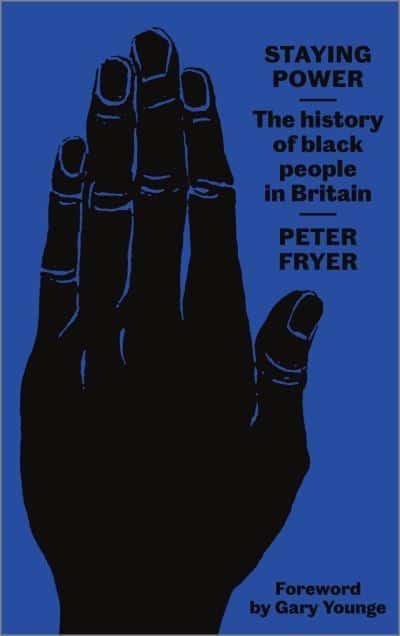
- Quoted from Staying Power, History of Black People in Britain, by Peter Fryer

Sunday, 17 April 2016

Saqib Deshmukh, MXM Coordinator and Community Advocate Reports on Anti-Fascist Mobilisation

Wycombe said NO to the English Defence League!

Malcolm X Movement coordinator Saqib Deshmukh was one of the lead organisers of the successful anti-fascist mobilisation against the far-right English Defence League. - MXM

High Wycombe Community Advocates (HWCA) were one of the key local groups behind the hugely successful counter demonstration against the EDL on Saturday April 9th. We were pleased overall that it went off relatively peacefully and it was great to see a mix of young and old and different sections of communities and political affiliations coming together. We hugely outnumbered the English Defence League whose presence only seemed larger due to the large number of police officers around them at all times! It showed how local and county/region wide groups could come together to find common purpose and ensure that there was effective opposition to the English Defence League. However, it also showed how out of touch how local leadership particularly in the Asian community are with what is happening on the ground.

What was important for us to demonstrate our leadership on the ground and ensure that white left groups understood this. We managed to work with Oxford UAF and young firebrands of High Wycombe Antifa and ensure that we had community based stewards/volunteers who helped us to manage the day. We were representing the local communities in the town and in particular the Asian/Muslim folk in High Wycombe. Many of our youth ignored the stay at home message and massive police presence to reach down to the latter rally. Many of them had been told at Friday prayers NOT to come into town! In our view this was Thames Valley Police scaremongering and community collusion at its finest. We see this as direct political interference by the police and this fundamentally conflicts with the police's legal duty to facilitate peaceful protest.

There was a minimum of trouble on Saturday, despite the scare tactics in place. However, we know that Thames Valley police needed to justify the massive deployment that took place. What we will be challenging the police on is why the racist clowns of the EDL were not arrested immediately for public order offences as soon as they got off their trains and coaches. It is clear that they were drunk and being disorderly in public, and in other contexts (football matches in particular) they would be charged and there were Section 34/35 in place to deal with anti-social behaviour. Having gone to many counter demos in recent years we’ve seen how close and chummy the cops get to these guys so it’s no surprise that they were not picked up.

There have also been a number of concerns that have been raised by ourselves and the other groups involved in our demonstration. The use of intelligence /evidence gathering teams was extremely obtrusive and bordering on harassment. Then when people covered their faces they were warned about breaching Section 60AA that was in place around not allowing faces to be covered. Additionally, the numbers of police deployed not proportionate to the actual threat being posed by the EDL and ourselves. Was this number of officers needed for the number of EDL and counter demonstrators present? Seriously poor intelligence on part of the police but the numbers present served their purpose to put off people coming out as the they effectively had the town on lock down.

There was a lack of local police/neighbourhood officers on duty so for example local African-Caribbean businesses on Desborough Road were not visited or given assurances on the day. On a wider basis many market traders and local businesses complained about a lack of information and visits from town centre management and police. HWCA had to provide reassurances/support to many of them before they decided to stay open otherwise the High Street in particular would have been deserted.

As ever the local media were selective in their coverage. One week there was strong TVP ‘riot police on standby’ message and then the day before one small article in printed edition. But we have little impartiality in the town and it’s clear from our campaigning and advocacy work how close they are to the police.

HWCA will be producing a report on last weekend's demonstrations and asking serious questions about the levels of policing present (and the cost of this), surveillance, and political interference and community collusion.  We will ensure that there is strong leadership that both questions those in power in the town and the brigade of community chumchay that give them legitimacy and cover.  As we maintain our battle is not just with the English Defence League but the daily grind of racism and harassment that our communities face from the authorities and the police. In the age of Prevent and Channel the challenge for us is greater than ever.

Saqib Deshmukh
HWCA/MXM