Showing posts with label Resistance. Show all posts

Sunday, 30 October 2022

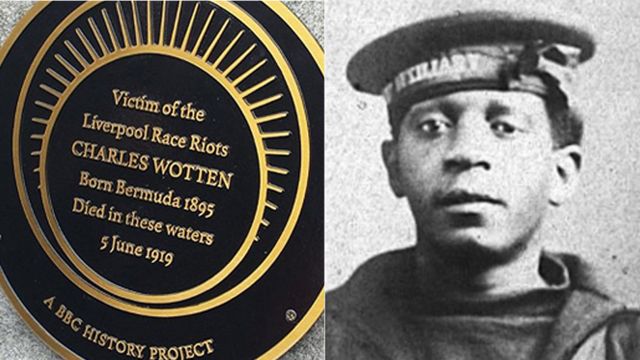
1919 Race Riots in Cardiff, Liverpool & East London (white racist mobs and resistance to them)

The first of the so-called race riots in British ports took place on Tyneside. Arab and Somali seamen are said to have settled in South Shields in the 1860s, and there were some West African and West Indian seamen in North Shields before the First World War. The war increased the area’s black population fourfold.4 In February 1919 some Arab seamen, all British subjects, having just paid £2 each to clear their union books, which had to be up to date before they could ship out, were then refused work. An official of the stewards’ and cooks’ union, J.B.Fye, incited a crowd of foreign white seamen against them; he was later convicted of using language likely to cause a breach of the peace. Fye hit one of the Arabs, who hit him back. The crowd chased the Arabs to Holborn, the district of South Shields where they lived. Here they were joined by some compatriots armed with revolvers, who fired warning shots over the heads of the at- tackers. The Arabs then turned the tables by chasing the crowd back to the shipping office, wrecking it pretty thoroughly, and beating up Fye and another union official. Army and navy patrols were called in and 12 Arabs were arrested. At Durham assizes, where the judge expressed some sympathy for them, three were acquitted, 12 were sentenced to three months’, and two to one month’s, hard labour. 

That was not however the feeling in south Wales, which was experiencing at the same time ‘one of the most vicious outbreaks of racial violence that has yet occurred in Britain’. During a week of anti-black rioting, three men were killed and dozens injured, and the damage caused to property cost Cardiff council over £3,000 to repair. The rioting ‘left a scar on the race relations of the city which took more than a generation to heal’.18The trouble began in Newport. On 6 June 1919 a crowd collected when a black man was alleged to have made an offensive remark to a white woman. One account said he put his arm round her and was attacked by a soldier. There was a fight in which many people were hurt, crowds started smashing the windows of black people’s homes, and the occupants defended themselves with pokers and staves and fired warning shots over their assailants’ heads. Two houses in George Street were wrecked and ransacked by a mob of several thousands that smashed every window, tore out the window-frames, threw bedding and furniture, including a ‘valuable piano’, into a nearby railway siding, and set fire to them. In Dolphin Street, Chinese laundries and a Greek-owned lodging house were wrecked, as were black people’s houses in Ruperra Street and a restaurant in Commercial Road owned by a black man named Delgrada. Twenty black and two white men were arrested. Plain-clothes and mounted police were drafted into the town, but it took a baton charge to disperse crowds making fresh attacks on George Street boarding-houses. ‘We are all one in Newport and mean to clear these niggers out’,one rioter told a reporter.The scene in Newport, said the South Wales Argus, looked like the aftermath of an air raid: ‘Windows are smashed, furniture in the front rooms has been wrecked, blood-stains are visible.’

On 11 June, at Cadoxton near Barry, a 30-year-old demobilized white soldier named Frederick Henry Longman, a dock labourer by trade, accosted a 45-year-old seaman from the French West Indies named Charles Emanuel with the words ‘Why don’t you go into your own street?’ then punched him on the forehead. Three other white men joined in, one of whom began hitting Emanuel on the back with a poker. Emanuel took out a clasp-knife and stabbed Longman, killing him instantly. Emanuel was chased by a large crowd and arrested with the knife still in his hand; he was later found guilty of manslaughter and sent to prison for five years. After his arrest crowds gathered outside the police station, smashed the windows of black people’s homes, and ‘paraded the streets of Cadoxton looking for coloured men’ until the early hours of the morning. Next day, though extra police had been drafted in, there were attempts to wreck black people’s homes. 
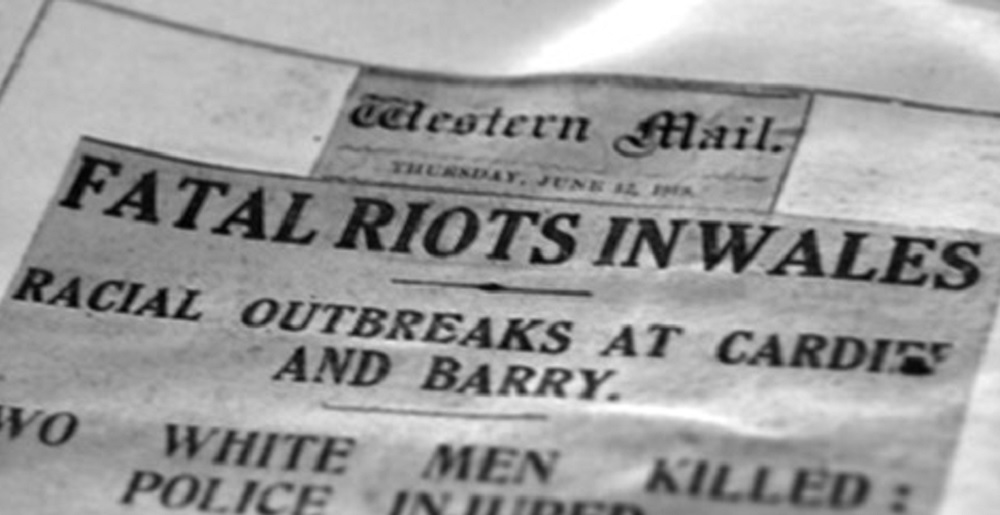

Cardiff ’s black population had increased from about 700 on the eve of the war to about 3,000 in April 1919. About 1,200 of these were unemployed seamen. There were at least as many demobilized white soldiers in the city, most of them unskilled. On 11 June a brake containing black men and their white wives, returning from an excursion, attracted a large and hostile crowd. Soon a crowd of whites and a crowd of blacks were lined up on opposite sides of Canal Parade bridge. A reporter saw ‘a howling mob of young fellows and girls facing the blacks at about 100 yards distance’. With shouts of ‘Come on and set about them!’ the whites made a rush from the north side throwing stones, whereupon revolver shots came from the black crowd and a white soldier was wounded in the thigh. The whites pressed forward in an attempt to reach Bute Town, the narrow cluster of streets between the Glamorganshire Canal and the Taff Vale Railway where a large number of Cardiff ’s black citizens had their homes, but police managed to stop most of them.The chief constable’s report, issued a month later, blamed whites for the original incident. ‘If the crowd had overpowered the police and got through’, he wrote, ‘the result would have been disastrous, as the black population would probably have fought with desperation and inflicted great loss of life.’Some attackers did get into Bute Street, where they smashed the doors and windows of Arab-owned lodging-houses with sticks – one shop front was ‘smashed to matchwood’ – and where a woman was arrested for flourishing a razor and ‘vowing vengeance on “niggers”’. A house in Homfray Street was set on fire and gutted, and in Caroline Street a white man died after his throat was cut – by a black man, it was alleged, though no eyewitness ever came forward, no black man was found in the vicinity, and no one was ever charged with the crime. A house owned by black people at the corner of Morgan Street and Adam Street was ransacked. Police broke into a house in Hope Street and dragged out a black man with blood streaming from his head: ‘He was greeted by a howl from the crowd, and several kicks and punches were aimed at him.’ A second soon appeared, ‘in much the same condition as his compatriot’. Last to be brought out was ‘a white girl, whose mouth was bleeding’. A black man called Norman Roberts was admitted to hospital with a severe knife wound in the abdomen. The disturbances went on until around midnight. 

This was only the prelude to a much more determined and organized attack on Cardiff’s black community over the next few days. The whole of the city’s police force was concentrated in the cordoned-off area that The Times called ‘nigger town’; a company of the Welsh Regiment was secretly drafted into Cardiff and held in readiness; and the stipendiary magistrate was preparing to read the Riot Act. Contemporary reports make it clear that ‘Colonial soldiers’ (i.e. Australians) armed with rifles placed themselves at the head of the lynch mobs. ‘The methods adopted by the soldiers’, said one report, ‘were those of active service, and the men, after firing from the prone position upon the blacks, crawled back to safety.’ Some of these riflemen were in khaki or blue uniforms, others in mufti with medal ribbons. The Western Mail gave a vivid account of an attack on the former Princess Royal hotel in Millicent Street:Several Colonial soldiers present constituted themselves the ringleaders of the besieging party, which was largely made up of discharged soldiers . . .The door of the house was attacked and it was quickly burst in. Men crowded into the narrow hall and began to ascend the stairs . . .A revolver shot rang out, and with it the exclamation, ‘My God, I am hit!’ Five other shots quickly followed.The attackers dropped flat on their faces, crawling back and telling those behind to do the same. They held up a table as a shield, and the defenders backed to the wall of the room. ‘Once at close quarters, each of the surviving attackers took his man, and soon desperate struggles were in progress around the room.’ Meanwhile ‘others of the raiding party were . . . busily engaged in ransacking the premises. Kit-bags containing clothing were hastily abstracted, and there were willing “receivers” outside.’ After it had been looted the house was set on fire. It was in Millicent Street that 40-year-old John Donovan, wearing his Mons ribbon, was shot through the heart by A cornered Arab. Ibrahim Ismaa’il, a Somali seaman and poet who was living in Cardiff at this time, refers to the Millicent Street fighting in his remarkable autobiography, completed in 1928 and recently discovered by Dr Richard Pankhurst. A Warsangeli, from the eastern part of what was then the British Somaliland protectorate, Ismaa’il was between 18 and 23 years old and worked as a ship’s fireman. He and some companions had only just come to Cardiff:Shortly after our arrival the black people in Cardiff were at- tacked by crowds of white people .

A Warsangeli named ‘Abdi Langara had a boarding house in Millicent Street, right in the European part of the town. It is there that I used to have my dinner every day. ‘Abdi acted as a sort of agent for the Warsangeli, who left their money with him when they went to sea, and also had their letters sent to his place. As soon as the fight started, all the Warsangeli who were in Cardiff went to Millicent Street to defend ‘Abdi’s house in case it was attacked. But to me and to my best friend – who has since died in Mecca – they said: ‘You are too young to come, and you have never faced difficulties of this kind.’ We insisted, for we could not bear to stay away when our brothers were in danger of being killed, but our plea was of no avail . . .So we went to the Somali boarding house of Haadzi ‘Aali and there we waited, ready for an attack, as we expected that a crowd of white people might break in at any moment.In Millicent Street, the fight started at about 7:30 p.m. and lasted a fairly long time. Seven or eight Warsangeli defended the house and most of them got badly wounded. Some of the white people also received wounds. In the end, the whites took possession of the first floor, soaked it with paraffin oil and set it alight. The Somalis managed to keep up the fight until the police arrived. One of them was left for dead in the front room and was later carried to the hospital where he recovered; some escaped through a neighbouring house and came to tell us the story of what had happened, the others gave themselves up to the police, and we did not see them for a long time. 

Crowds led by soldiers were surging from street to street wherever the cry of ‘blacks’ went up. One victim had a crowd of about 1,000 after him. The newspaper accounts are eloquent: ‘Always “the black man” was their quarry, and whenever one was rooted out by the police . . . the mob rushed upon him, and he got away with difficulty’ – amid cries of ‘Kill him!’ A black man spotted near the Wharf bridge was first insulted and then attacked by three whites, one of whom blew a whistle. This seemed to be an expected signal, because hundreds of persons rushed up from the neighbouring streets, including many women and girls, who had sticks and stones, and flung them at the unfortunate coloured man as they chased him along the street.Two men dragged out of their Bute Street house ‘fought desperately with frying pans and pokers’. A Somali priest, Hadji Mahomet, was prepared to face the mob, but his white wife pleaded with him to hide so he clambered up a drainpipe, hid on the roof, ‘and with true Eastern stoicism watched his residence being reduced to a skeleton’. A Malayan boarding-house in Bute Terrace was wrecked and the occupants, fleeing to the roof, were pelted with stones. In Homfray Street an Arab named Ali Abdul fired a revolver at his assailants; when he was arrested there were shouts of ‘Now we’ve got him!’ and ‘Lynch him!’ (Charged later with attempted murder, he ‘had some difficulty in walking into court owing to an injured leg, and he also bore evidence on his forehead of having received injuries’.) An Arab ‘caught and maltreated’ in Tredegar Street lay unconscious for a long time.One whom the lynch mob did succeed in killing, a young Arab named Mahommed Abdullah, died in hospital of a fractured skull after being savagely beaten in an attack on an Arab restaurant and boarding-house, used chiefly by Somalis, at 264 Bute Street. The mob charged down the street, threw stones into the building from both sides, and smashed the windows. Shots were fired from up- stairs. The mob surged in, and police arrived soon afterwards. 

The inquest on Abdullah could not decide whether he had been hit on the head with a chair leg or a police truncheon. Hundreds of black people attended his funeral. Murder charges against six white men were dropped for lack of evidence. Some former members of the British West Indies Regiment were daring enough to go about the streets with their uniforms on, which afforded them some protection. But not much. One black ex-serviceman, described in a local paper as ‘a well-set-up young fellow’, ‘proved to be a brave man, and in perfect English appealed to the crowd not to molest him, but this did not prevent him receiving several blows’ before police escorted him away. For the most part however, in the words of the Western Mail, ‘the efforts of the police were confined to keeping the white men from damaging property’. Property being more important than people, the community under siege had two choices. They could leave the city; or they could turn their ghetto into a fortress. A few did leave, on the afternoon of 13 June: a sad little procession of seamen with kit-bags on their backs and sticks in their hands, escorted by police and followed by jeering crowds. The majority chose to stay and, if need be, fight.As crowds gathered again that evening in St Mary Street, Custom House Street, The Hayes, and the top end of Bute Road, the black citizens of Loudoun Square, Maria Street, Sophia Street, and Angelina Street ‘established quietly determined means of self- protection’. They posted sentries, loaded their guns, and left no one in doubt of their mood, as a South Wales News reporter who got through the police cordon testified:The coloured men, while calm and collected, were well pre- pared for any attack, and had the mob from the city broken through the police cordon there would have been bloodshed on a big scale, and the attacking force would have suffered heavily . . . Hundreds of negroes were collected, but these were very peaceful, and were amicably discussing the situation among themselves. Nevertheless, they were in a determined mood, and ready to defend ‘our quarter of the city’ at all costs. They had posted sentries at each entrance to give notice of the approach of any hostile crowd . . . An old resident of Loudoun- square told me that he and his wife had watched the negroes loading revolvers. They made no secret of it . . . As my informant put it, ‘There is enough arms and ammunition among them to stock an arsenal.’ Long-term black residents said: ‘It will be hell let loose . . .if the mob comes into our streets . . . If we are unprotected from hooligan rioters who can blame us for trying to protect ourselves?’ An outstanding leader of Cardiff ’s black community had emerged in the shape of Dr Rufus Leicester Fennell. A West Indian medically trained in the United States, he had survived 314 days of trench warfare and had been wounded three times while serving in Mesopotamia, where he had attended thousands of British troops. Lacking British medical qualifications, he had been practising as a dentist in Pontypridd. When the rioting started in Cardiff he went there. 

Neil Evans, interviewing old people in Cardiff a few years ago, found that Fennell was remembered for his courage and intelligence: ‘During the riots he was said to have walked boldly into the centre of the town, despite warnings of the possible dire consequences of this action.’29 Aged 31, about six feet tall, well dressed and highly articulate, Fennell acted as the community’s spokesman in negotiations with the authorities; pressed the claims of those who wanted to be repatriated; told reporters ‘that it is absolutely necessary to grip the evil, and not to play with it’; and told one of several protest meetings held at the docks by West Indians, Somalis, Arabs, Egyptians, and ‘Portuguese subjects’ that it was their duty to stay within the law, but ‘if they did not protect their homes after remaining within the law they would be cowards, not men’.

By mid-September 600 black men had been repatriated. But not everyone involved wanted to be, and part of Cardiff ’s black population indignantly rejected the offer. What the chief constable, in a confidential report to Scotland Yard, called the ‘militant section’ insisted on their right as British subjects to get fair treatment and stay in the United Kingdom. And some of the militants, the chief constable added, ‘expressed their willingness to be repatriated but openly stated that it would only be for the object of creating racial feeling against members of the white race domiciled in their country’.32Two hundred of those who did want to be repatriated – Egyptians, Somalis, and Arabs – were sent to Plymouth by train, and Fennell went with them. It may have been Fennell who told the weekly paper John Bull how shamefully they were treated. They were penniless, but the tiny gratuity promised them was never paid. They were hungry, but were given nothing to eat on the journey. And when they went on board ship the staff were all off duty, the captain was asleep, and there was no food at all for them. ‘These coloured Britons had all done first-class war work’, commented John Bull, ‘yet they were treated worse than repatriated enemy aliens.’Soon afterwards Fennell was in London, complaining to MPs and the Home Office about the flaws in the repatriation process.

Some had been sent home before they were paid compensation for losses suffered in the riots; others, before receiving the back pay due to them. Fennell accused the Cardiff police of prejudice against black people and asked that police cease to supervise the departures. But the officials were unsympathetic. Soon after leaving the Home Office Fennell found himself under arrest on a trumped-up fraud charge. After being kept in custody in London for a while he came up in court in Cardiff on 22 July, accused of obtaining £2 by false pretences from Ahmed Ben Ahmed Demary, a boarding-house master. Fennell’s solicitor told the court that there was ‘a great deal at the back of the case’ and that ‘certain men were anxious to keep the accused in prison because of the way he had watched the interests of the coloured men’. The magistrate dismissed the charge. London was not spared sporadic outbreaks of anti-black – and anti-Chinese – rioting. On 16 April there was a ‘serious riot’ in Cable Street, Stepney. Shots were fired, a violent street fight took place, and several black seamen were injured. 

On 29 May a seaman named William Samuel, described by a Colonial Office civil servant as ‘a burly negro, with an aggressive manner’,wrote from the Sailors’Home in St Anne Street, Limehouse, to the colonial secretary, complaining of attacks on black men in the London streets: ‘a sargeant of police said to us last night, why; We want you niggers out of our country this is a white man’s country and not yours.’ That same evening large crowds gathered outside the Strangers’ Home in West India Dock Road, cat-calling and insulting every black person who appeared and trying to force their way in. There were similar scenes outside lodging-houses used by black seamen. Outside the St Anne Street sailors’ hostel 29-year-old John Martin, a Jamaican on four weeks’ leave from the Royal Navy, was seized by the head from behind, knocked down by men armed with sticks, and kicked in the mouth. Alleged to have fired a revolver towards the crowd, Martin was arrested with injuries to head and face, and charged with wounding a ship’s fireman. He was found not guilty. 


On 16 June a coffee-shop in Cable Street used by black people was stormed by a crowd that seized one of the customers and beat him. Next day there were disturbances in Poplar
, where a gang attacked a house occupied by a Chinese family, cleared out the furniture, stacked it in the middle of the street, and set fire to it, causing a ‘huge blaze’ that gutted the house.40During that hot summer of 1919 black people in Britain were not only being attacked physically, in their homes and in the streets. They were attacked also with the pen by those who excused the aggressors by blaming their victims. The Manchester Guardian, for instance, blamed black people for daring to defend themselves against lynch mobs: ‘The quiet, apparently inoffensive, nigger becomes a demon when armed with revolver or razor.’ Above all, black men were blamed, as that Liverpool policeman had blamed them, for associating with white women. This explanation for the riots was advanced by a former British colonial administrator, Sir Ralph Williams, who had served in Bechuanaland and Barbados and had been governor of the Windward Islands in 1906–9. His recreation was ‘ceaseless travelling to far-away countries’, and when the riots reached their climax he wrote a letter to The Times summing up what he had learnt on his travels:To almost every white man and woman who has lived a life among coloured races, intimate association between black or coloured men and white women is a thing of horror . . . It is an instinctive certainty that sexual relations between white women and coloured men revolt our very nature . . . What blame . . . to those white men who, seeing these conditions and loathing them, resort to violence? . . .We cannot forcibly repatriate British subjects of good character, but we can take such steps as will prevent the employment of an unusually large number of men of colour in our great shipping centres.
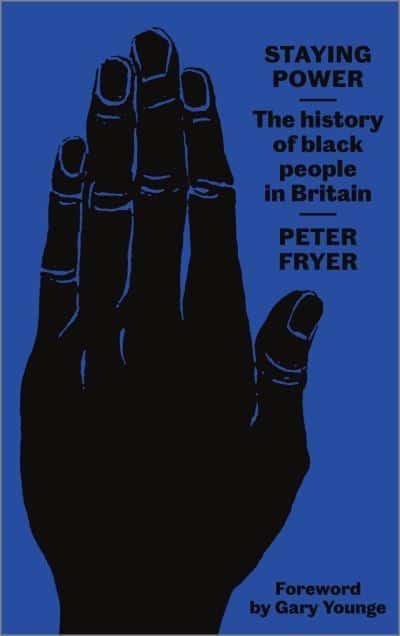


- Quoted from Staying Power, History of Black People in Britain, by Peter Fryer

Friday, 30 September 2022

MXM Public event: STRIKE! Challenges of Trade Unionism in Brexit Britain

STRIKE! Challenges of Trade Unionism in Brexit Britain

Eventbrite event page

Facebook event page

*Fri 28th Oct 2022

630-830pm (Starting sharp at 630pm)

London Irish Centre, 

50-52 Camden Square, 

London NW1 9XB

£5 suggested entry

This event brings some of the most experienced speakers directly involved at the forefront of the class struggle exploring challenges of defending working class people under increasing attacks by the Tory state in the contexts of a growing far-right state, racism in the colonial capitalist global crises in general.

Speakers: 

Steve Hedley (former Assistant Gen Sec RMT Union)

Suresh Grover (The Monitoring Group, former Stephen Lawrence family campaign coordinator)

Glenroy Watson (Chair of RMT's 2023 Black & Ethnic Conference)

Arnie Hill (London Black Revs)

Chair: Malcolm X Movement

*This event will be audio-visually recorded for upload onto social media, please let the chair know if you do not wish to be recorded  

*We apologise that there are steps leading into the room


Tuesday, 20 September 2022

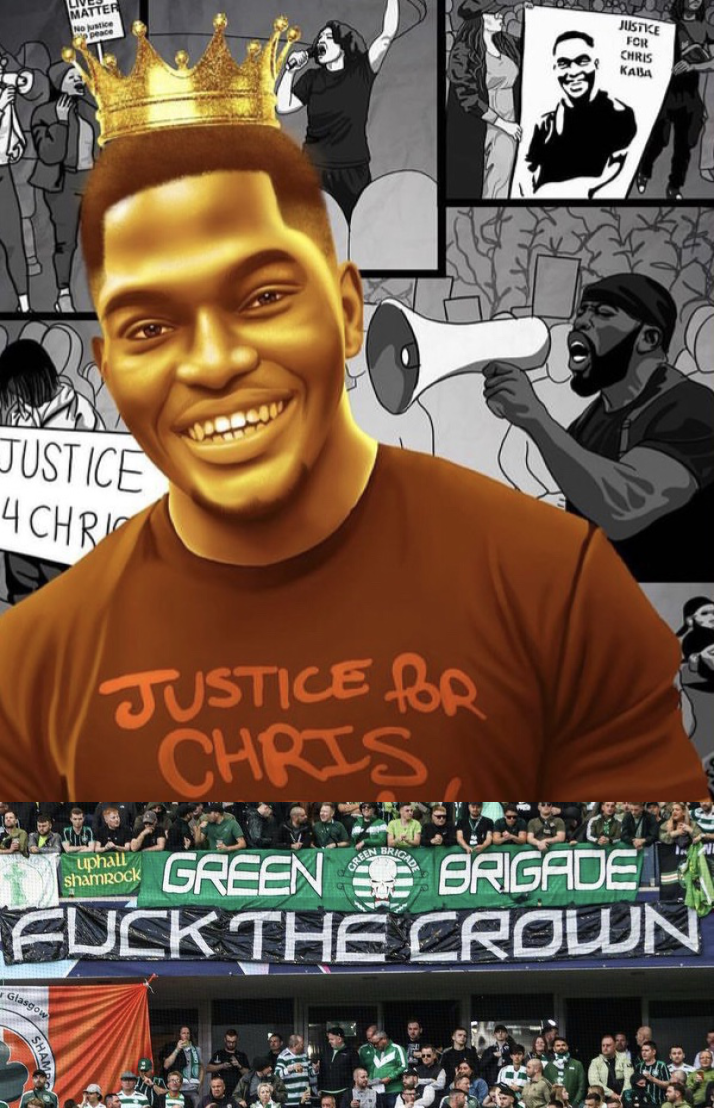
UK State Terrified Chris Kaba-related Black-led Uprising will Destroy its Hyper-Monarchist Narrative


UK State Terrified Chris Kaba-related Black-led Uprising will Destroy its Hyper-Monarchist Narrative

- State attempting to keep Chris Kaba campaign quiet and ineffective

- Importance of employing quick effective strategic grassroots direct-actions around #ChrisKaba justice campaign

- Grassroots Fenians led the way in political resistance to the Monarchy

- British left terrified of street-protest against Monarchy, instead hiding on (anti-)social media

The Queen died and immediately the Brit colonial-capitalist ruling classes sighed in profound relief that their labour lieutenants in the trade union leadership - CWU/Ward, RMT/Lynch/Gordon/Dempsey etc - actually turned out to be more loyal to the Monarchy than even the bourgeoisie! A historic sell-out in the working class trade union movement that exposed the Monarchist loyalty and leanings of those in the case of Lynch and Dempsey like to bandy around their apparent political affiliations with leading Irish republican socialist James Connolly. 

However, just as the sell-out was announced on the morning after Elizabeth Windsor's death the police shoot-to-kill of 24yr old Chris Kaba in Lambeth, South London set off again the pattern of state killing of a working class black youth and the resultant outpouring of grief, anger and determination of black and allied working class people seething with a sense of injustice and seeking to get that justice, many would like to in the words of Malcolm X to 'declare their/our right on this earth to for Chris Kaba and the Black community to be treated as a human being, to be respected as a human being, which we/they intend to bring into existence by any means necessary'. As soon as the colonial capitalist state removed one irritation: the strike wave, another wave of humanity asserted itself around the martyrdom of Chris Kaba.

The preparations for the death of Liz Windsor have been years in the making, a weaponisation of her death for the state to deepen its control over the great unwashed domestically and globally. In this context the possible uprising of the Black and poor youth at this time around Chris Kaba is something the state wants to avoid at all costs. The spectre of the 5-day national uprising after the shoot-to-kill of Mark Duggan on Aug 04 2011 haunts the ruling classes. 

The August 2011 Uprising haunts the state and lives-on as a glorious folk tale on the council estates across the country. Mark Duggan's 21yr old son Bandokay , a well-known rapper from the Broadwater Farm-based 'Original Farm Boys' crew/music group, often speaks about the uprisings on the many interviews on social media. These interviews and the music of OFB / Bandokay keeps the Uprising alive in the minds and imaginations of our youths beyond that which they hear in conversations amongst their older peers and family. Of course Broadwater Farm council estate itself is a militant symbol of Black working class-led resistance and victories against the British state especially due to the Uprising there on Oct 6 1984.

The state quickly announced a homicide investigation into the police officer who shot dead Chris Kaba. And then quickly announced that the officer was suspended (on full-pay, no doubt), angering his colleagues who threatened to hand in their weapons. Please do, thank you. Now it seems the family are imminently going to receive the body-cam footage. Labour Party MPs were quick to make statements pretending to be in synpathy with the Chris Kaba family while they daily collaborate with the state to deliver torture and death to our people on the council estates. Labour Party MP's were at the Chris Kaba protest in Whitehall where Diane Abbott was booed by Black youths for demanding everyone keeps everything peaceful. 

It is globally known that if your loved one is killed you go out with all your peoples and you make as much noise and destruction to show that the injustice will not go without resistance, hence the meaning of the slogan: no justice, no peace. The two-week Black-led uprising following the martyrdom of George Floyd is a case in point. There are alternatively many peaceful means by which the same aims can be met. 

The point of tactics is to achieve strategies of rallying further sections of the grassroots, building a broad united front, and to show the powers that be that we can apply direct pressure to ensure that they cannot oppress us without consequences to them. Such peaceful direction actions could be occupations and sit-ins of strategic institutions of the police, council etc; non-violent direct actions could be a on-going rolling hunger strike-tents at Brixton police station or New Scotland Yard; to peacefully block the transport system of the capital which is easily done with quite few people. With the imaginations of the grassroots many other things can be done. Ideally all tactics should be deployed all at once. 

The Chris Kaba justice campaign has grassroots backing to do so. The grassroots are ready for action but lack the leadership , determination themselves and organisations necessary for what we need to do for Chris Kaba and for everyone in defending them against further death and injury by the state, Realistically, it is probably unlikely that the grassroots will rise-up but we cannot but point to what decades, generations and centuries of our resistance informs us to do. We stand with our martyrs and ancestors whose sacrifices meant that we live today, there is no alternative to our advocacy.

The Sinn Fein leadership continue the political rationale of the British colonial 'good friday agreement' which means SF members have been strictly instructed to the nutty colonial monarchist sentiments of the unionist community in the occupied 6 counties. So heartbreaking and embarrassing to see SF leaders Alex Maskey and Michell O'Neil schmooze with king charles the turd and try to spin it as something positive for Irish people. 

This should not take away from the fact that the real opposition to the uk monarchy at the grassroots has been led by Irish Fenians / Irish Republicans. Be it the slogan against the king on Black Mountain by Belfast, the 'fuck your crown' banner drop by the Green Brigade in the stadium and the only street protest called against the monarchy in Belfast too. This current Brit monarchist hype is being used to further push away any chance of Scottish independence or Irish reunification. The monarchy doesn't just handover the break-up of its union and rule, it only does so when there is an escalating mass pressure from the colonised masses, of which currently there is an absence. 

While one might criticise the SF leadership, what SF have done in the past and still today are head and shoulders above the pathetic state of the British (colonial) left who have firmly stayed in their bedrooms looking nervously out of their windows into the real world while writing some posturing nonsense on social media. We say: fight by any means necessary for justice for Chris Kaba, against the racist anti-working class brutality of the brit state. As we go forward the global system of colonial-capitalism is going to deepen even further to terror which it is inflicting on workers and peasants the world over, this increasingly pressure on us including in Britain and Ireland will push all the oppressed to react. How and when, we don't know, but the science of repression and resistance is a universal and permanent one. 


Further watching:

What to do when the state kills one of us: 'Ultraviolence': https://vimeo.com/570908985


Wednesday, 30 August 2017

MXM public event: Marcus Garvey: Origins of 'Race First' - 630pm Sat 23rd Sept, Housmans N1 9DX

Marcus Garvey & the Origin of 'Race First'
630pm, Sat 23 Sept 2017
Housmans Bookshop
5 Caledonian Road, N1 9DX
£5 suggested entry

Facebook event page

Guest speaker: Brother Omowale (Pan-African Community Society Forum)

We are proud to announce that we are hosting Brother Omowale, a leading Pan-Africanist organiser and researcher in London on the subject of Marcus Garvey and the the origins of 'race first' in Garvey and Garvey's historic movement of the United Negro Improvement Asoociation (UNIA).

Monday, 7 August 2017

MXM public event: Carnival and Black & Brown Resistance

Carnival and Black & Brown Resistance

Facebook event page

630pm Fri 25 Aug
Housmans Bookshop
5 Caledonian Road
N1 9DY
£5 suggested entry

Speakers confirmed so far:

Sister Juni - East Oxford Carnival organiser
Arnie Hill - London Black Revs

As Black and Brown and migrant working class communities continue to feel the increasing squeeze of British colonial state oppression and exploitation, in the aftermath of the Grenfell state massacre, as Notting Hill Carnival itself sees pushes to basically annull it by removal out of the historic community of Ladbroke Grove: the Malcolm X Movement brings together this event and conversation exploring the histories of Carnival, its role as resistant cultural expressions of our experiences, and what is the outlook for the Carnival weekend in the and generally.

Wednesday, 26 July 2017

Libyans against terrorism, slavery & colonialism - Fri 28 July Housmans, 630pm N1 9DY

Libyans against terrorism, slavery & colonialism
630pm Fri 28 July
Housmans Bookshop
5 Caledonian Road
N1 9DY
£5 suggested entry

Facebook event page

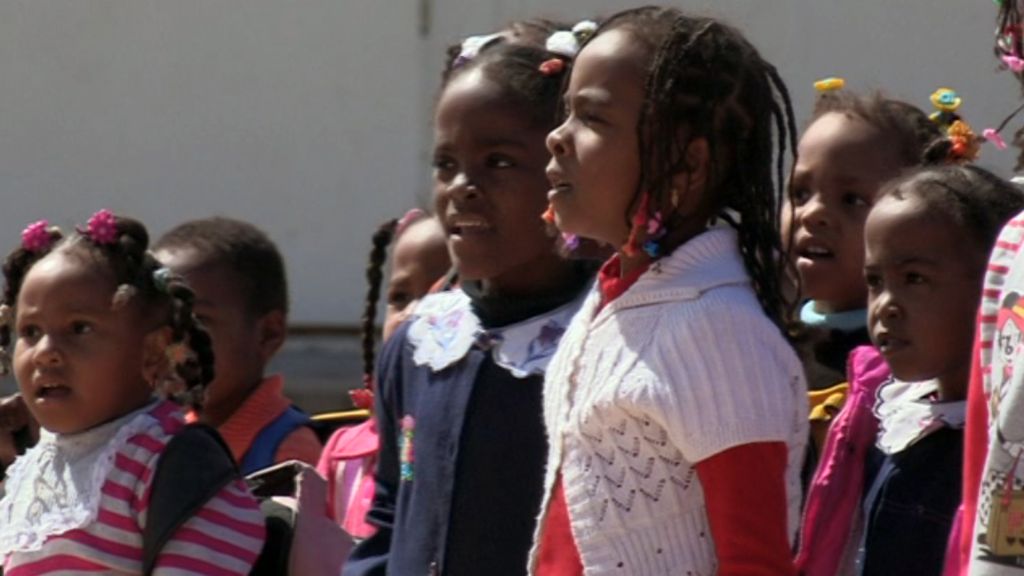
Libyan people from different parts of Libya will be speaking about terrorism in Libya and its roots and nature and how it reaches other parts of the world including Manchester. They will be speaking about the on-going persecution of darker skinned Libyan and non-Libyan African people, exposing the realities of the people smuggling and who is behind them. There will also be a person from Tawergha (pictured are internally displaced children from Tawergha), which was the ONLY Black African town in North Africa which has been totally wiped out by Nato proxy armed gangs.

Thursday, 25 May 2017

event: Libyans against terrorism, slavery & colonialism

Libyans against terrorism, slavery & colonialism
630pm Fri 28 July
Housmans Bookshop
5 Caledonian Road
N1 9DY

Facebook event page

Libyan people from different parts of Libya will be speaking about terrorism in Libya and its roots and nature and how it reaches other parts of the world including Manchester. They will be speaking about the on-going persecution of darker skinned Libyan and non-Libyan African people, exposing the realities of the people smuggling and who is behind them. There will also be a person from Tawergha (pictured are internally displaced children from Tawergha), which was the ONLY Black African town in North Africa which has been totally wiped out by Nato proxy armed gangs.

Tuesday, 25 October 2016

Launching new historic DVD and book on Libyan Popular Anti-Imperialist Resistance


Launching new historic DVD and book on Libyan Popular Anti-Imperialist Resistance

The Malcolm X Movement proudly hosts the premier of a hard-hitting, informative and inspiring look at African and Libyan popular anti-imperialist resistance entitled Nato War on Libya (53mins). We are also hosting at the same event a book launch of a collection of writings about the martyrdom of Muammar Gaddafi entitled On the Martyrdom of Muammar Gaddafi: 21st Century Fascism and Resistance. One of our MXM coordinators - Sukant Chandan is the editor of the book and the filmmaker of the doc.

The event takes place this Sat 29th Oct at 6pm at Marx Memorial Library,  EC1R 0DU (£5 suggested entry). The Libyan community are kindly and generously providing free Libyan snacks and refreshments at this event.

Please find the Facebook event page HERE.

In solidarity
MXM Coordinators Team

Sunday, 15 May 2016

MXM Easter Rising Event Report - 'The Most Important 1916 Centenary Event'

'This is the most important 1916 event I have addressed' - Bernadette Devlin MacAliskey
Event report on Malcolm X Movement's and Crimes of Britain's event 100 Years Since the Irish Easter Uprising

Friday 13 yesterday turned out to be a fantastic day to salute the revolutionaries and martyrs of the great Irish Easter Uprising in 1916.day the 13th there was a tiny bit of bad luck that was overshadowed by an enormously informative and inspiring evening. The Malcolm X Movement's event was entitled 100 Years Since the Irish Easter Uprising, and we were honoured to have two special guests, both of whom very kindly flew in especially for this event, being former PLO Ambassador to Ireland and veteran senior Palestinian revolutionary Saeb Shaath, and the most well known and respected living female Irish revolutionary Bernadette Devlin MacAliskey. It was also a great privilege to have on the panel leading global Black radical decolonial scholar Hakim Adi and finally our young comrade Gerard MacNamara from the excellent and highly successful social media project Crimes of Britain as well as MXM coordinator Sukant Chandan chairing the event. The revolutionary 'craic' was being had in full effect! The room was packed with over 80 people in total in attendance.

Sukant Chandan opened the event for the MXM as chair by stating that the historical importance of the 1916 Uprising are many including the fact that it was the only anti-imperialist uprising in Europe during the first imperialist war, and that it electrified the anti-colonial peoples especially of the British empire as it struck the enemy right on its doorstep at such a critical moment. Chandan stated the reason the MXM has put on this event and the reason that of all the centenary commemorations across the world why this one stands out is due to the fact that no one until this event has brought clearly the global anti-imperialist analysis from Africa and Asia into the analysis to 1916. Chandan singled out Peter Middleton for particular thanks who was in attendance and whom in the 1990s, was a leading political organiser in London for Irish freedom, including amongst many other the weekly protests outside Downing Street.

Gerard MacNamara from Crimes of Britain and co-organisers of this event made his maiden public speech, and a brilliant talk outlining the history of British colonial looting and genocide against the Irish people, in the forced famines against the Irish for example in taking away millions of gallons of butter away from the Irish, tearing off roofs of houses so people could not squat them and how this colonial supremacism AKA white supremacy/racism against the Irish is still normalised today. MacNamara stated that Channel 4 recently floated the idea of having a comedy on the Irish famine. While at the time of the famines a British army colonel stated: "you must pay or get out, I tell you, I care no more about turning you out on the roadside than I do about shooting the bird which flies across my path".

Hakim Adi made a very informative speech as to how the Irish struggle had inspired Black / Pan-African liberation, including stating how Claude McKay, a leading Halrem Renaissance man of Jamaican heritage spent time in London uniting with Irish revolutionaries in the 1930s. Adi also relayed how much the Irish struggle informed many ideas in the leader of the millions-strong global United Negro Improvement Association, Marcus Garvey, who named his own building Liberty Hall after the Irish revolutionaries building in Dublin also called Liberty Hall that is still a trade union hub today.

Saeb Shaath gave a impassioned contribution imparting knowledge to the attendees as to the plots of the British colonialists in their oppression of Ireland and how they developed their oppression to then export to the rest of the people of the British colonies. Shaath focused especially on colonial partition, of which the British are the global masters, and how they have divided and partitioned many countries and regions, including Palestine and the Arab world. Shaath then recounted the current situation of British imperialist meddling in the North African and Middle Eastern regions. There were many cheers and applause for Palestinian liberation throughout his contribution from the audience.

Bernadette Devlin MacAliskey very generously flew in from Derry especially for this event but the flight was delayed for an hour so she entered the event at 830pm. However, she was welcomed by great cheering and applause and everyone spontaneously and en-masse chanted her name in unison to welcome her, reflecting the great respect and admiration her role and sacrifices for Irish freedom and socialism inspires. Devlin spoke in her typically eloquent and articulate manner on a number of issues that captivated all in attendance. She stated that she has spoken at many centenary events, events attended by great numbers of people but that the MXM event she was addressing was the most important one that she had spoken at because while Irish people have been commemorating and saluting 1916 for 99 years, it was an event like this that brought together all the global dimensions and impact of 1916. Devlin stated that the Irish people who were starved out of Ireland by the British colonialists first went to the North Americas as Irish speakers not English speakers. Devlin explained that they were not a part of the colonial 'white' club, and that there was a process that turned Irish people into white people, and that was through realising that if they spoke English that they could not be visibly defined as being phenotypically be seen as anything other than white. Devlin stated that she did not identify with those of Irish heritage that saw themselves as white in the USA, but she identified closely with the Black Panthers, with the Native American movement and other radical movements. Devlin's contribution was met with great applause and a long standing ovation.

The event saw young Black and Asian and radical white British youth and Irish patriots and revolutionaries gather together to understand each other and to unite with each other. No one else is doing this important work in England in bringing together communities of resistance, communities of oppressed peoples.

The full speeches have been recorded on video and will be uploaded in the coming two weeks and will be shared across MXM accounts and supporters on social media.

The MXM would like to give a big thank you to all our speakers, and all those who attended and put in the hard work to make this event a success.

Malcolm X Movement facebook

Next MXM public event:
1926 General Strike: 9 Days That Shook Britain

MXM twitter

Email: 2015mxm@gmail.com


Tuesday, 3 May 2016

Afeni Shakur, Mother of 2Pac Passes Onto the Ancestors

The Malcolm X Movement sends love and solidarity to Afeni Shakur and her loved ones as she passed onto the Ancestors. Although we in the MXM never worked directly with Afeni Shakur, we have a long and close relationship to the Black Panther Alumni and admire and respect Afeni Shaur for her role in being one of the leading cadres of the Black Panthers in the New York chapter, and also the ordeals and challenges she had to face as a result of USA state repression of her directly as a member of the Black Panthers and as a strong Black person and more so a strong Black woman in a context of resisting intense and brutal colonial repression.

During the repression of the Black Panthers, Afeni Shakur and twenty other leading cadres of the New York Black Panthers - dubbed the 'New York 21' at the time - faced trumped up charges of terrorism against shopping malls and police offices. With Tupac Amaru Shakur (AKA '2Pac' in later life) in her womb while in prison, Afeni defended herself in the trial that saw all 21 Panthers being acquitted of all charges.

With a growing baby Afeni Shakur was closely associated with the Black Liberation Army, an armed revolutionary off shoot of the Black Panthers who carried on operations into the late 1970s. For her associations and past associations Afeni Shakur and her family continued to be subject to repression and harassment, with little Tupac even being questioned by the FBI in this primary school.

Despite all these challenges and many others, or perhaps because of these very challenges and the radical political community in which Tupac was veing raised as a child, Tupac achieved brilliant results in school and was an extremely bright and gifted child by his mid teens, as so many of our Black and Asian and working class children are. But the impact of repression is multifaceted and deep going, maybe some of the impact of all this trauma manifested itself towards the latter years of Tupac's life with continued and intensified USA state harassment of Tupac and his family.

Tupac's own step father - Mutulu Shakur - was in prison related to his time in the Black Liberation Army, and the USA state ensured that Mutulu and Tupac's communication was ended, and that brought to an end a very fruitful and interesting dialogue between the two whereby Mutulu was constantly questioning and discussing with Tupac about his cultural work as a rapper and artist.

One has to remember that Tupac was actually a leader of the New Afrikan Panthers before he became very famous, and it was fame within a colonial industry and the people around him that led to him drifting away from the type of debates and reflections that Tupac was having with his step father and others as to the on-going liberation struggle and the changes in the lives of Black people since the demise of the Black Panthers. Tupac as well as Biggie were killed in what in what points to a continuation of the counter-revolutionary covert program of state repression, dirty tricks and assassination. At a time when the imperialist system was seeing great strides in the colonial destruction of the potential and actuality of Hip-Hop and Rap as a means of uniting and advancing the Black Liberation Movement, anti-imperialism and much more, the threat of leading 100s of millions of Black youth and youth loyal to the Black Liberation was a threat too large and had to be destroyed.

Afeni Shakur and her family and comrades suffered another great tragedy after all the hurt, trauma and loss from the days of the Panthers and since. Afeni like so many Black women and mother warriors across the world took on what must have been a near impossibly task of maintaining her own life and working hard to ensure the legacy of her son.

Although Afeni moved away from some of the revolutionary politics of the Panthers, nonetheless it is inspiring that she developed her own spiritual strength to keep her going in this life until today. We salute Afeni Shakur, a true Black rose that grew irresistibly through the many layers of concrete that our enemies poured onto her and her family. Panther Power, Black Power!

Tupac's dedication to his mother, Afeni Shakur


Sunday, 17 April 2016

Saqib Deshmukh, MXM Coordinator and Community Advocate Reports on Anti-Fascist Mobilisation

Wycombe said NO to the English Defence League!

Malcolm X Movement coordinator Saqib Deshmukh was one of the lead organisers of the successful anti-fascist mobilisation against the far-right English Defence League. - MXM

High Wycombe Community Advocates (HWCA) were one of the key local groups behind the hugely successful counter demonstration against the EDL on Saturday April 9th. We were pleased overall that it went off relatively peacefully and it was great to see a mix of young and old and different sections of communities and political affiliations coming together. We hugely outnumbered the English Defence League whose presence only seemed larger due to the large number of police officers around them at all times! It showed how local and county/region wide groups could come together to find common purpose and ensure that there was effective opposition to the English Defence League. However, it also showed how out of touch how local leadership particularly in the Asian community are with what is happening on the ground.

What was important for us to demonstrate our leadership on the ground and ensure that white left groups understood this. We managed to work with Oxford UAF and young firebrands of High Wycombe Antifa and ensure that we had community based stewards/volunteers who helped us to manage the day. We were representing the local communities in the town and in particular the Asian/Muslim folk in High Wycombe. Many of our youth ignored the stay at home message and massive police presence to reach down to the latter rally. Many of them had been told at Friday prayers NOT to come into town! In our view this was Thames Valley Police scaremongering and community collusion at its finest. We see this as direct political interference by the police and this fundamentally conflicts with the police's legal duty to facilitate peaceful protest.

There was a minimum of trouble on Saturday, despite the scare tactics in place. However, we know that Thames Valley police needed to justify the massive deployment that took place. What we will be challenging the police on is why the racist clowns of the EDL were not arrested immediately for public order offences as soon as they got off their trains and coaches. It is clear that they were drunk and being disorderly in public, and in other contexts (football matches in particular) they would be charged and there were Section 34/35 in place to deal with anti-social behaviour. Having gone to many counter demos in recent years we’ve seen how close and chummy the cops get to these guys so it’s no surprise that they were not picked up.

There have also been a number of concerns that have been raised by ourselves and the other groups involved in our demonstration. The use of intelligence /evidence gathering teams was extremely obtrusive and bordering on harassment. Then when people covered their faces they were warned about breaching Section 60AA that was in place around not allowing faces to be covered. Additionally, the numbers of police deployed not proportionate to the actual threat being posed by the EDL and ourselves. Was this number of officers needed for the number of EDL and counter demonstrators present? Seriously poor intelligence on part of the police but the numbers present served their purpose to put off people coming out as the they effectively had the town on lock down.

There was a lack of local police/neighbourhood officers on duty so for example local African-Caribbean businesses on Desborough Road were not visited or given assurances on the day. On a wider basis many market traders and local businesses complained about a lack of information and visits from town centre management and police. HWCA had to provide reassurances/support to many of them before they decided to stay open otherwise the High Street in particular would have been deserted.

As ever the local media were selective in their coverage. One week there was strong TVP ‘riot police on standby’ message and then the day before one small article in printed edition. But we have little impartiality in the town and it’s clear from our campaigning and advocacy work how close they are to the police.

HWCA will be producing a report on last weekend's demonstrations and asking serious questions about the levels of policing present (and the cost of this), surveillance, and political interference and community collusion.  We will ensure that there is strong leadership that both questions those in power in the town and the brigade of community chumchay that give them legitimacy and cover.  As we maintain our battle is not just with the English Defence League but the daily grind of racism and harassment that our communities face from the authorities and the police. In the age of Prevent and Channel the challenge for us is greater than ever.

Saqib Deshmukh
HWCA/MXM


Thursday, 14 April 2016

200th Anniversary of the Bussa-led Slave Revolt against British Colonialists


Big-up Bussa!

Exactly 200 years ago, on April 14th, 1816, a revolt was ignited by what seemed like the unlikeliest of leaders in the unlikeliest of places. The place was Barbados, a British-controlled plantation colony worked by enslaved Africans that had not seen a rebellion for 123 years; and the leader was Bussa, a slave who had been promoted to the level of manager. Managers were not supposed to revolt; indeed one of the major reasons for promoting intelligent slaves to such relatively privileged positions was to co-opt those with leadership potential into the system, providing an incentive for obedience. But Bussa was not to be co-opted; the rebellion quickly spread to 12 plantations, with almost 4000 enslaved Africans joining the revolt.

The whole region had been set ablaze by the Haitian revolution of the 1790s, which defeated French, Spanish and British troops to declare the first Black republic in 1804. To prevent further such imperial disasters, the British had abolished the slave trade and established a new code in an attempt to ensure slaves were not pushed to the point of rebellion elsewhere. Bussa’s rebellion, in a small and previously calm Caribbean island, showed that none of this was going to work; slavery itself would have to go. From this point on, it was just a matter of time, and in 1833 the abolition of slavery was formally declared.

Bussa’s rebellion should be remembered, for it holds important and pertinent lessons for our current rulers: 1, that attempts to co-opt people into supporting injustice do not always work and 2, Rebellions can emerge in the most unsuspected of places, amongst even the most apparently obedient subjects.

(Thanks to MXM coordinator Dan Glazebrook)

Wednesday, 13 April 2016

Remember Britain's Most Notorious Massacre in India, and the Act of Vengeance it Inspired


On the 13 April 1919 in Amritsar, Punjab the Brits using Asian (Gurkha) mercenaries conducted a massacre of up to 1000 peaceful anti-colonial protestors. Thousands of people were gathered on one of the region's most popular festival. General O'Dwyer was a sadistic leader of the British colonialists and ordered the South Asian mercenaries to shoot down men, women and children in their hundreds. It is said that a small child who witnessed the massacre later dedicated his life to avenge this massacre.

This massacre was avenged by Shaheed Udham Singh who shot dead the Brit general responsible at a public meeting in London on 13 March 1940. Shaheed Udham Singh was a individual operator attached to the left nationalist and socialist and communist trends of the national liberation movement especially the party of mutiny or the 'Ghadar' Movement of Punjabi people of all faiths. Shaheed Udham Singh was put on a secret trial where he called himself 'Mohammed Singh Azad' to symbolise Indian peoples unity towards freedom. He was executed by hanging and went to his martyrdom with honour and pride in his heart. He is considered a revolutionary saint by millions across India, Pakistan and across South Asia. The struggle of South Asian peoples against British imperialism continues today.